Showing: 1 - 4 of 4 RESULTS

Athens – Taking Advantage of the Shoulder Seasons

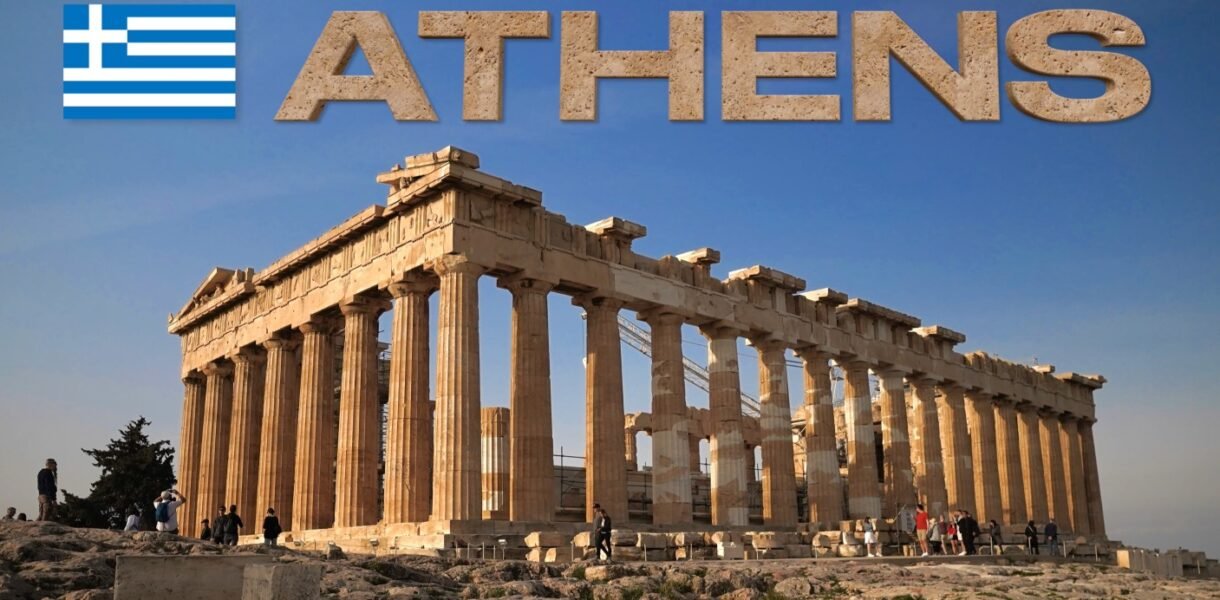
Athens, the birthplace of Western civilization. Athens in the springtime is wonderful! My husband and I always try to hit tourist “hot spots “ in the shoulder seasons, and that strategy really paid off here. For good reason, this place is on many bucket lists. It was definitely on ours. Shoulder seasons in Greece are April and May, and again in September and October. Athens sees approximately 10 million visitors annually, so visiting in the low seasons was the way to go for us.
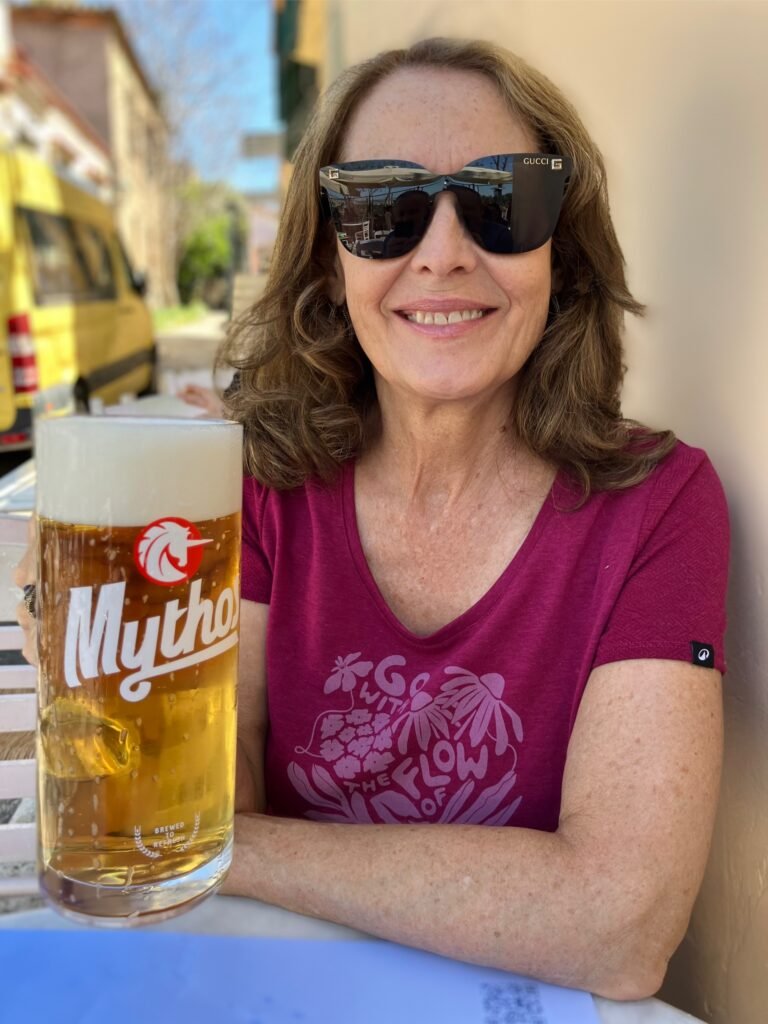
We arrived in the second week of April. Cool mornings, warm afternoons, pleasant evenings, and the trees and flowers were blooming profusely. School wasn’t out for the summer yet, so the crowds were very manageable. This makes for such a better experience. We didn’t have to wait in line for anything, restaurants were easy to get into, and the tourists that were there were dispersed enough that we were able to take our time in all the places we visited.

Located on mainland Greece, Athens is a bustling city of over 3,000,000 people. We stayed just outside the Plaka area, which is where most of the ancient sites are located. This allowed us to be in walking distance to just about everything we wanted to see. This section of the city is amazing as ancient landmarks are blended in with modern urban culture. I was amazed everyday to just be walking down the street, turn a corner, and be met with a piece of history that is hundreds or a thousand or more years old.

The Acropolis

The Acropolis is the main attraction to see in Athens, and it dominates the skyline here. I did some research while planning our trip and found that it is highly recommended to visit the Acropolis Museum before you visit the Acropolis itself, so you will know what you’re looking at, and some of the history behind it.
I also discovered that you need to buy your tickets to the Acropolis well in advance of arriving in Greece. Don’t wait until you get there as they pretty much stay sold out several weeks in advance, even in the low seasons. The official online ticket platform is the Hellenic Heritage e-ticket system. Try to avoid third party sellers and be aware that there are no “skip the line” access tickets. All official tickets require you to pick a time slot, and you enter with that group. Tickets are 30 Euro per person.
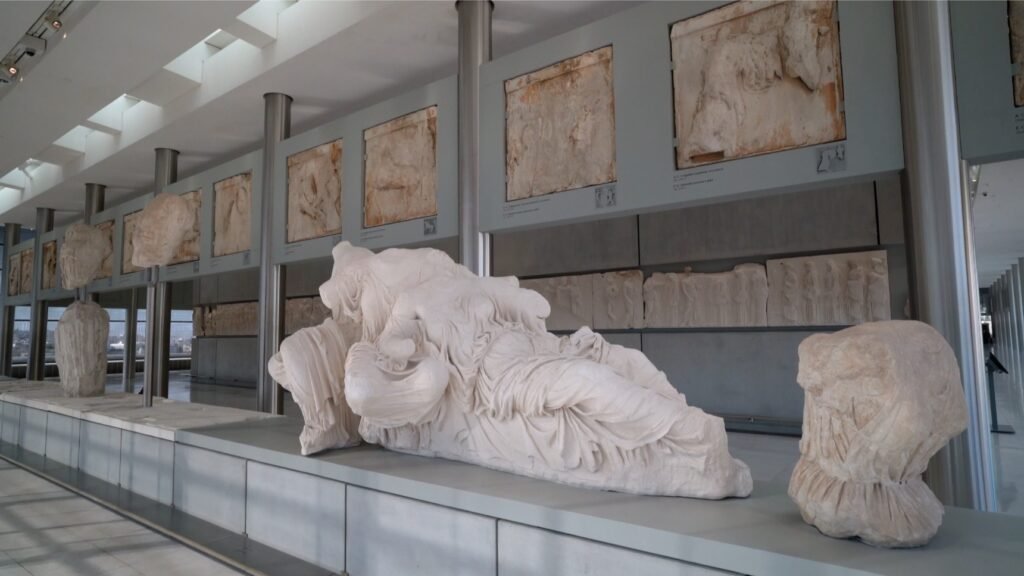
The Acropolis Museum is ranked as one of the most important museums in the world. It was built specifically to house only the artifacts that come from the Athenian Acropolis and its slopes. The museum itself is built over an archeological site and a glass floor allows you to view it. This is one of the most impressive museums I have ever been to. It showcases items from the Greek Bronze Age, through Roman and early Christian times, and the Greek Byzantine period. Whether you’re a history buff like me, or not, this place will mesmerize you.

Give yourself at least two hours here, we were there for three. You have the option of using an audio guide or a live guide, which I highly recommend. The museum is huge and we never felt crowded or rushed to move along. Make sure you don’t miss walking through the excavation site that is underneath the museum, plus, there is another room of the museum down there filled with some very impressive sculptures and busts. The level of artistry and skill some of these sculptors and jewelry makers had is nothing less than amazing. Tickets for the museum are 20 Euro per person.
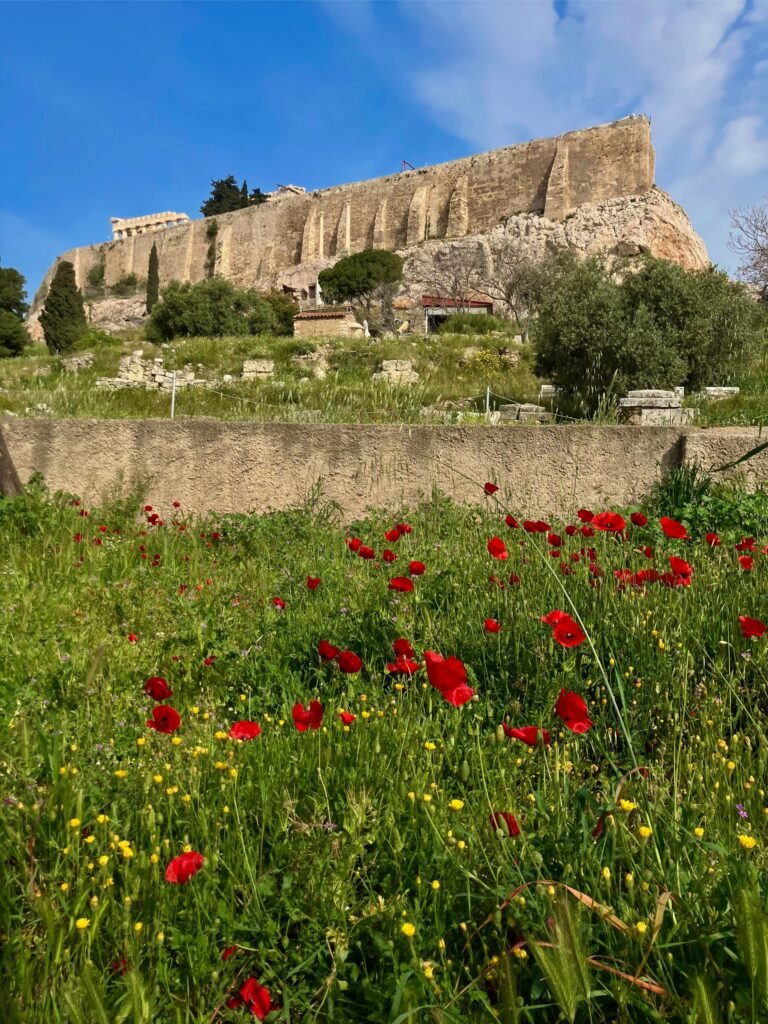
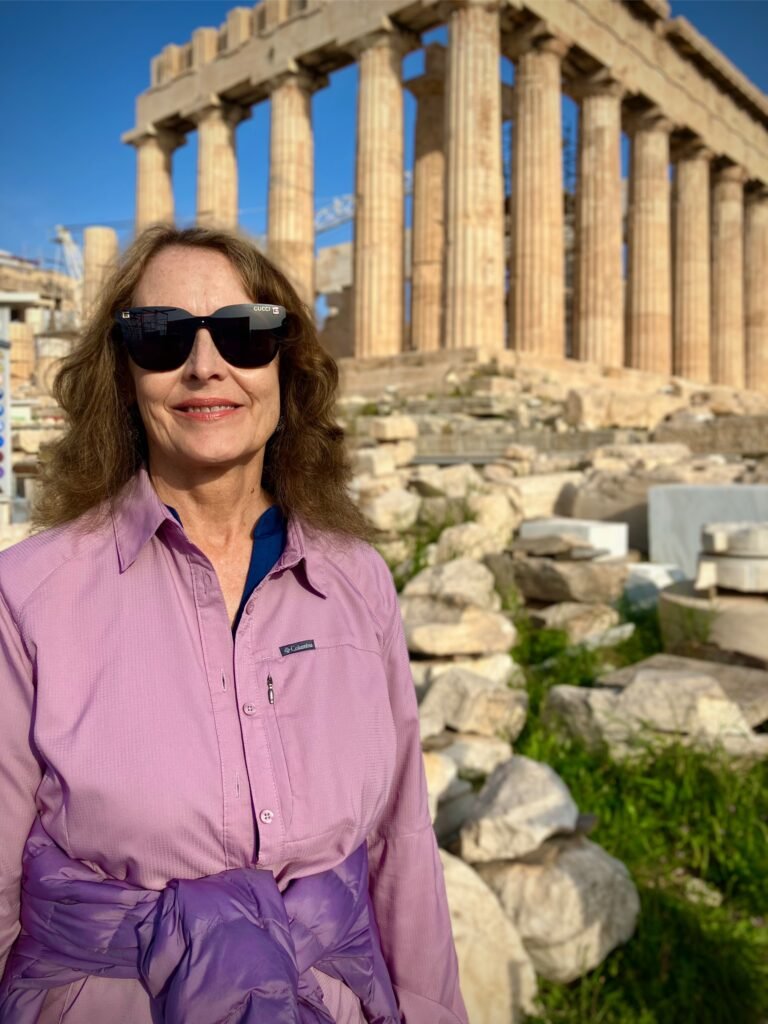
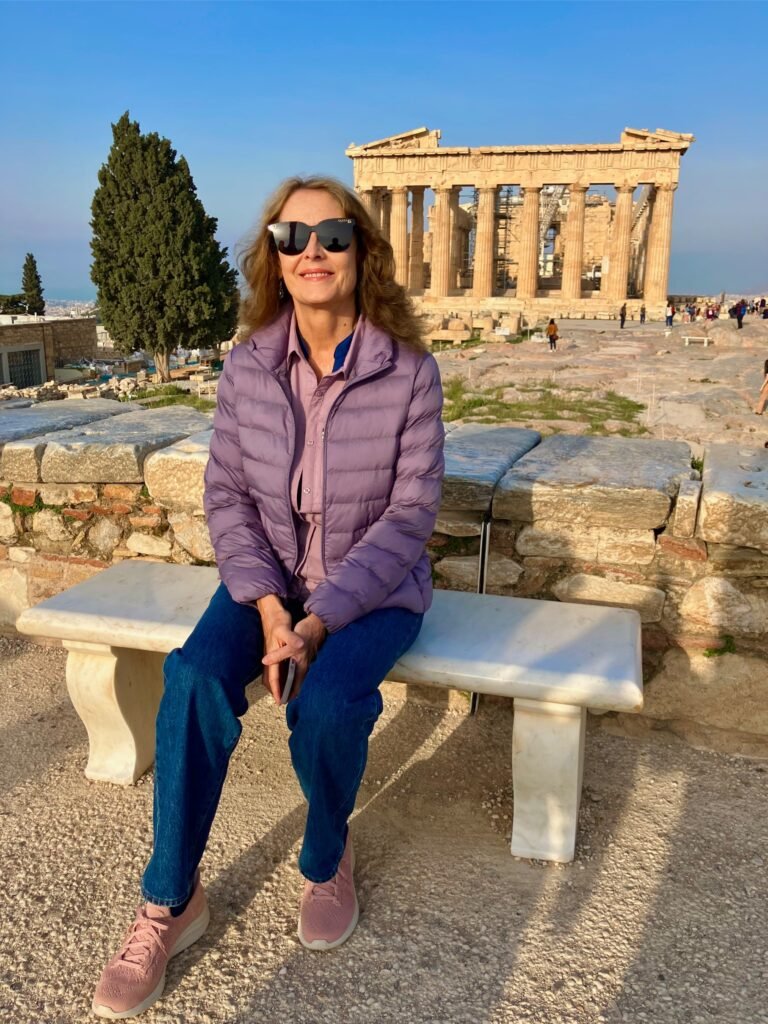
I was so excited as we waited in line to enter the Acropolis. Groups of 150 are allowed in every hour. I chose the 8:00 am entry time when purchasing our tickets online. This is the first group entering for the day. With no other groups entering ahead of us, we were able to really get a feel for this ancient place, and it did feel almost magical. It also allowed us to take photos without the crowds. There are two entrances to the ancient city and I suggest using the main entrance as it gives you the classic views of the Acropolis upon entering. 
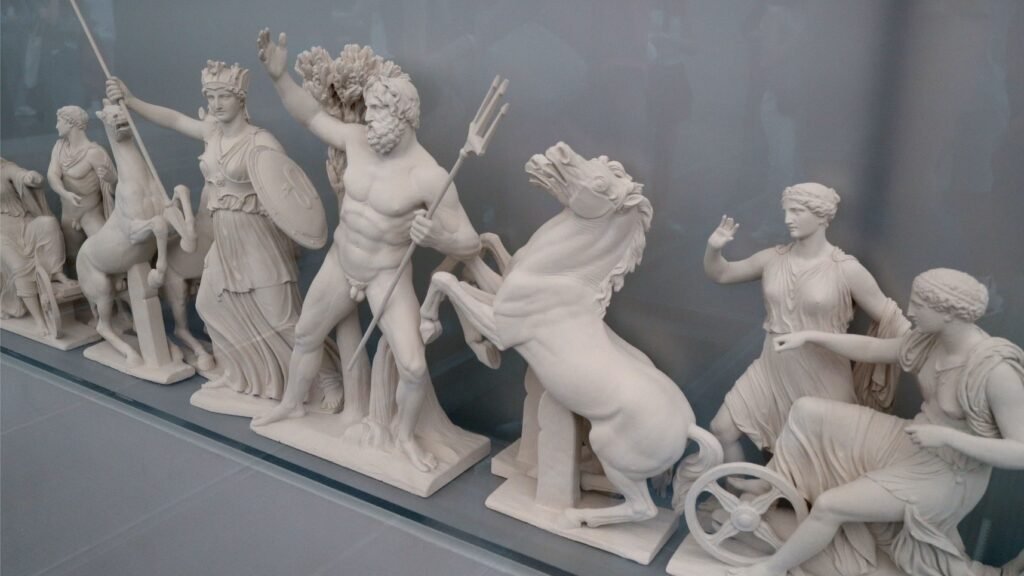
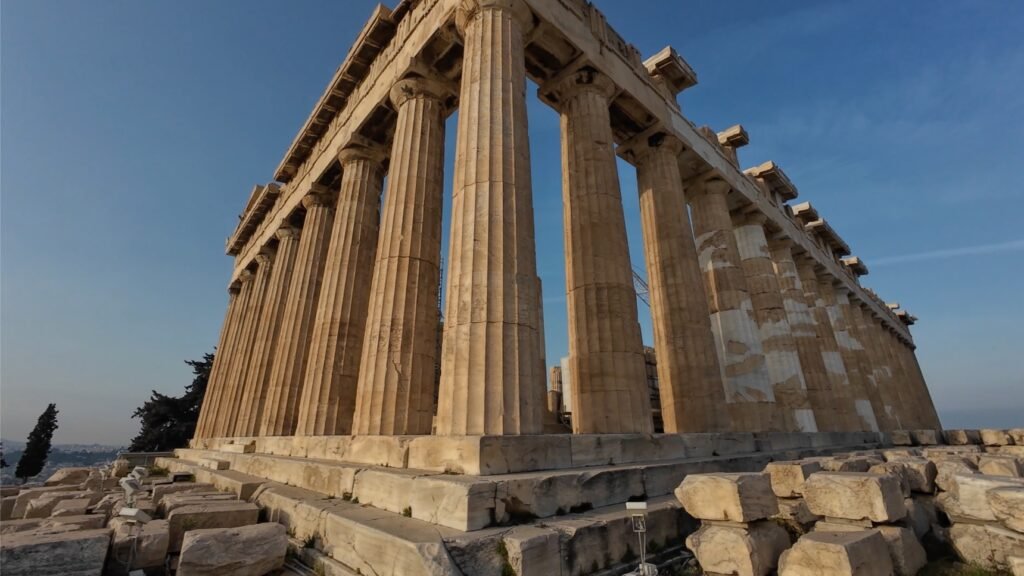
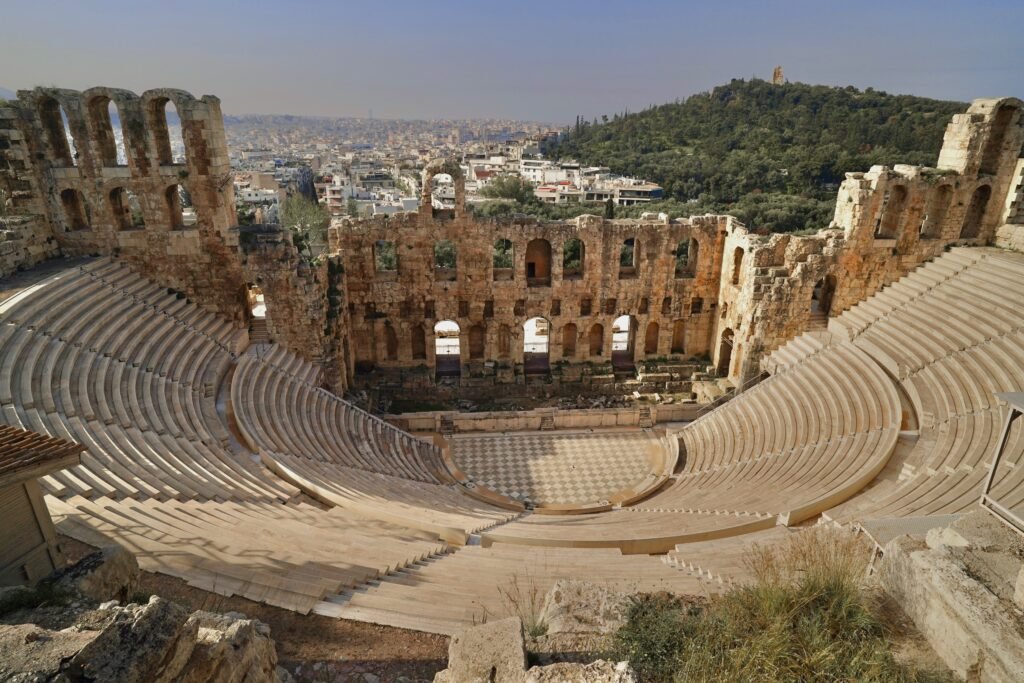
The main attraction on the hill is the Parthenon. Built in the 5th century BCE, the sheer scale and beauty of it is awe inspiring. Pictures cannot convey how outstanding it is. Other sites in the Acropolis include the Erictheon, a temple dedicated to Athena and Poseidon. It is known for its porch of six caryatids, sculptures of draped female figures that support the porch. All of the ancient structures on top of the hill are magnificent, but don’t forget to stop and take in the stunning views of Athens all the way out to the sea while you’re up there. On the South slope you can visit the Theatre of Dionysius and the Odeon of Herodes Atticus. Amazingly, events are still held in the Odeon. In addition to the theatres, the South slope is covered with many monuments and temples. The architectural design and the stone work found on these ancient edifices never ceases to amaze me. They rival anything that is built today and they still hold an awe inspiring energy.

The Panathenaic Stadium

The next stop on our list was also very phenomenal. The original Olympic stadium, the Panathenaic Stadium. It was originally built in 330 BCE by Lycurgus, for the ancient Panathenaic Games. It was rebuilt in 144 CE by Senator Herodes Atticus using Pentelic marble. It is the only all marble stadium in the world and the reason it is still standing, and used, today.
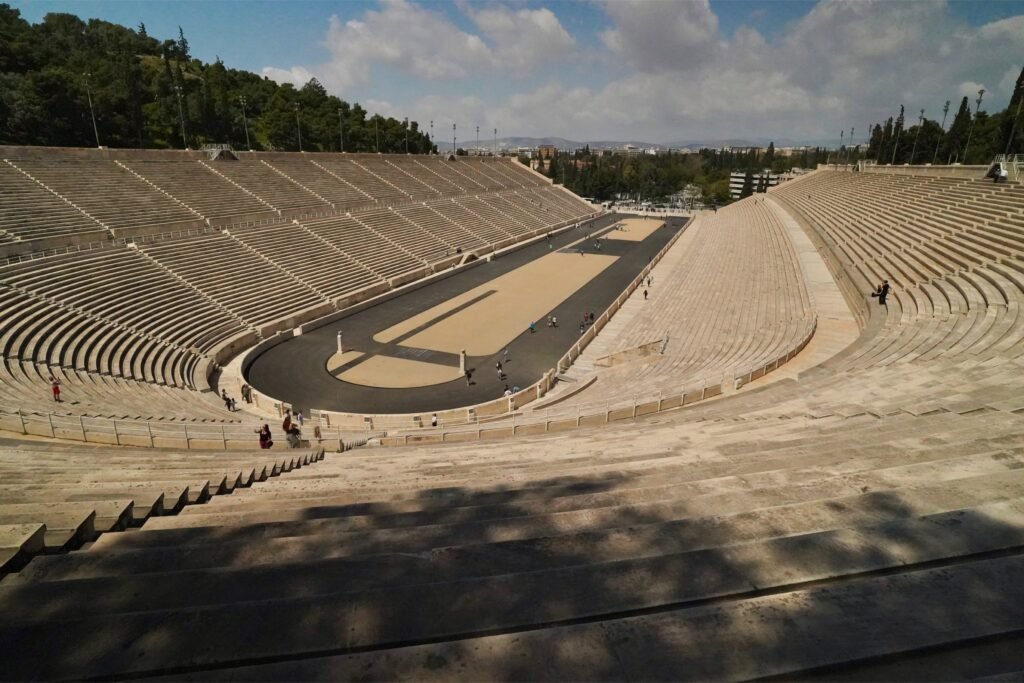
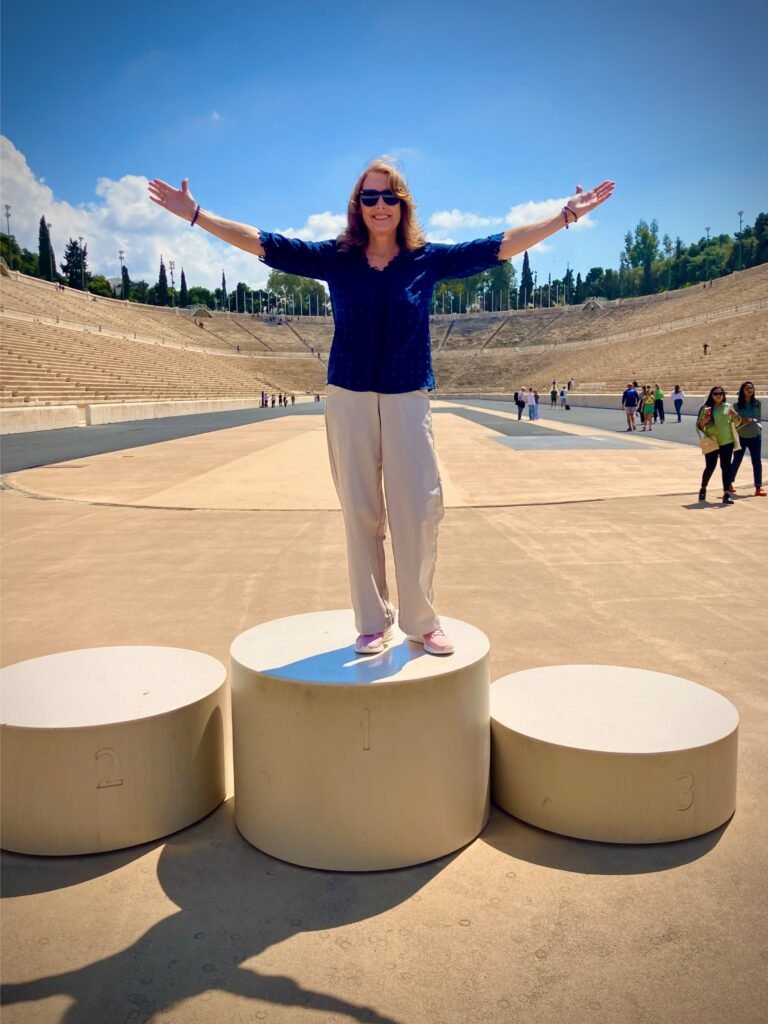
The first modern Olympic Games were held here in 1896. There is also a fascinating museum inside where you can see all of the Olympic torches used over the past 130 years. Each fashioned by an artist from the host nation, and some are very elaborate. Also on display are each host nation’s  posters advertising the games. I especially liked the poster from the 1936 Olympics held in Germany in which Jesse Owens was a hero. He won four gold medals, disproving Hitler’s theories of Aryan racial superiority.

Holding 80,000 spectators, it was truly awesome to climb to the top of the stands and look out over the stadium. I couldn’t help but wonder about all the Olympians that had ran around that track, and the spectators that came to watch those ancient Olympic Games. Just sitting in those stands gave me a feeling of excitement and anticipation, as if an Olympic event was about to start and athletes were about to emerge from the tunnels. It also highlighted how similar we all still are, no matter how many centuries separate us.
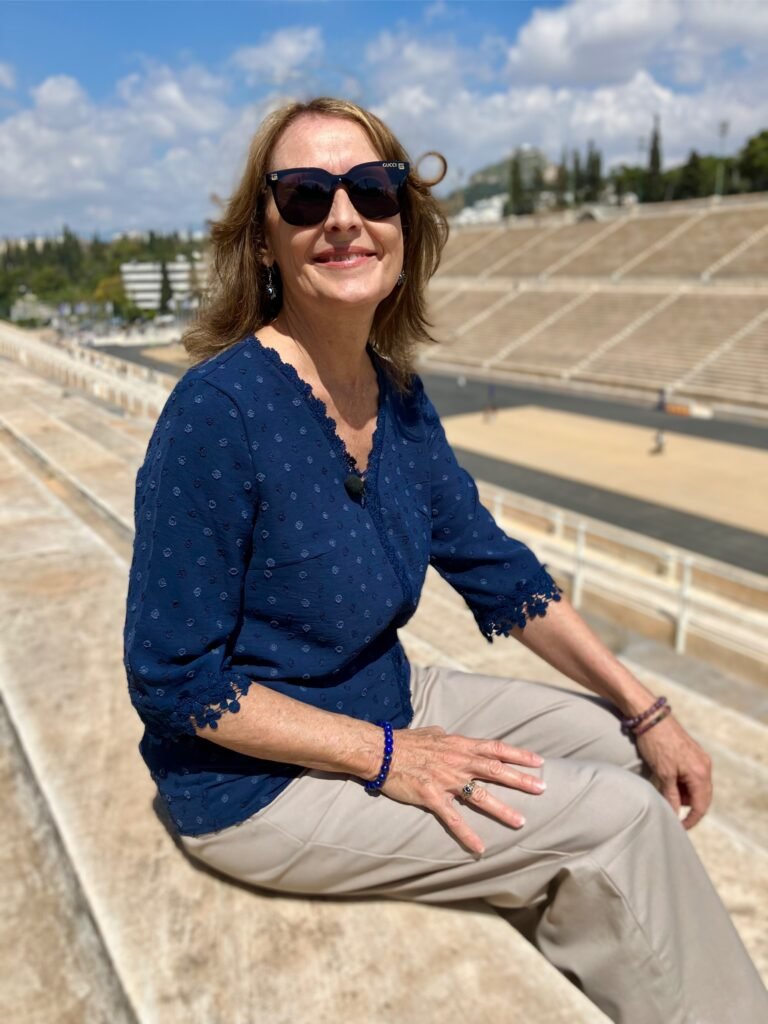
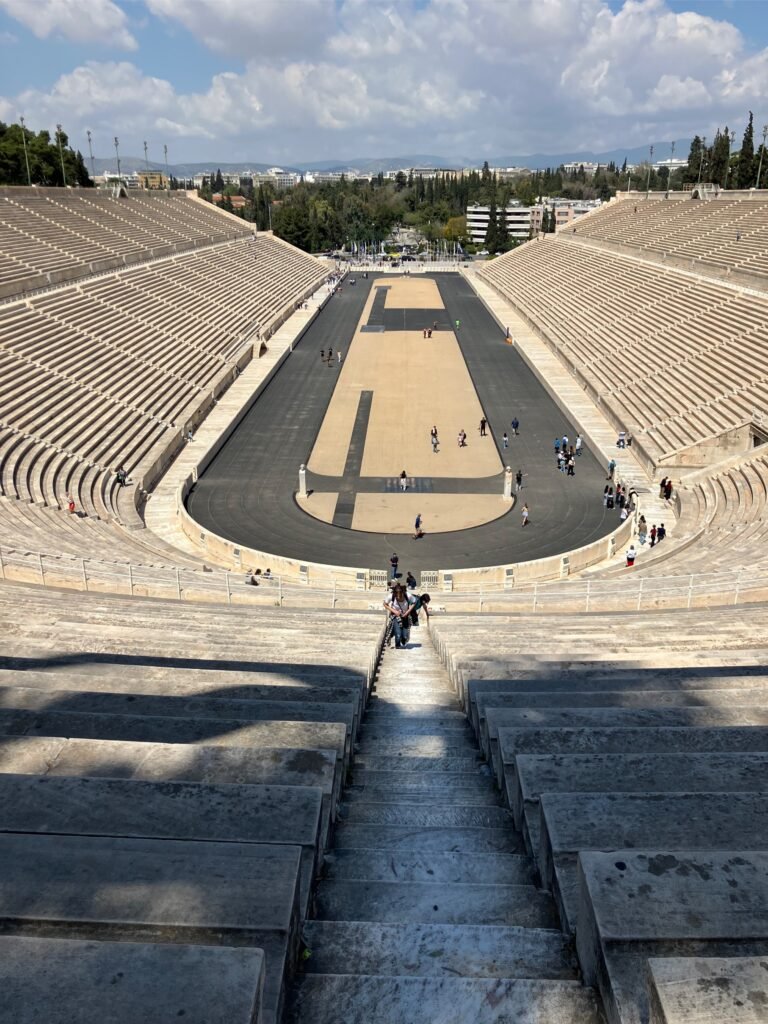
You are allowed to run, or walk, around the track and even stand on the podium. Sporting events are still held here. The last Olympic Games held here were in 2004 and Special Olympics in 2011. It was 20 Euro per person to enter and that does include the museum. 

The National Botanical Gardens is right next to the stadium and we walked through them after leaving the Olympic arena. It is a huge park with many different sections. Shaded with beautiful trees, and the bushes and flower gardens were all in bloom. It featured many sculptures, fountains, and even a turtle pond. It was a great place to sit and relax for a while, and it’s completely free.

Anafiotika Neighborhood

Another popular site is the Anafiotika neighborhood. This neighborhood is unlike any other neighborhood in all of Athens. It sits tucked between the Plaka neighborhood where I’m staying, and Acropolis Hill. It was built in the 1830s by construction workers that were brought here, under the King’s orders, from the island of Anafi.
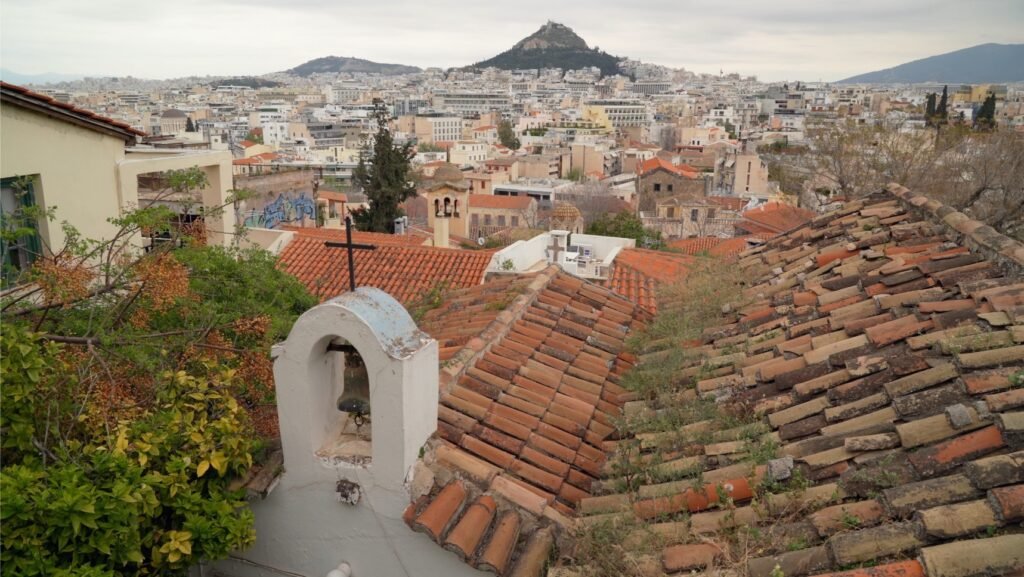
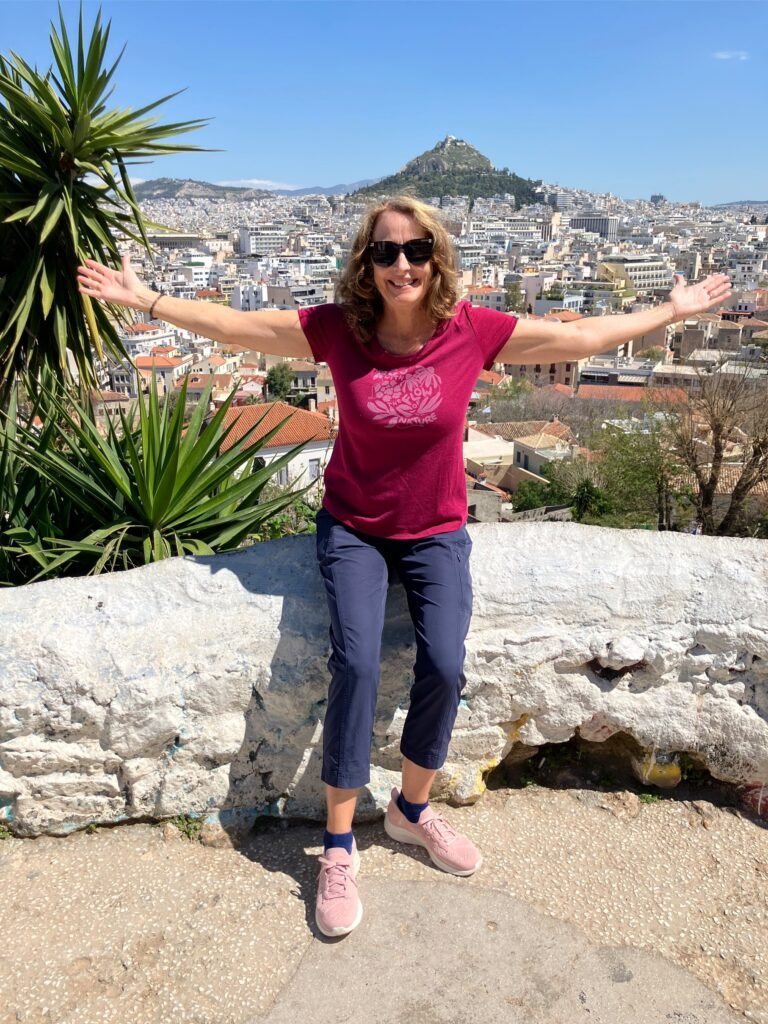
The workers purposely built their neighborhood to feel like the homes they had to leave behind on the island. It is a very scenic area with great photo opportunities. The views of Athens from the top are spectacular. This neighborhood is pedestrian only as it is made up of very narrow pathways and many, many stairs.
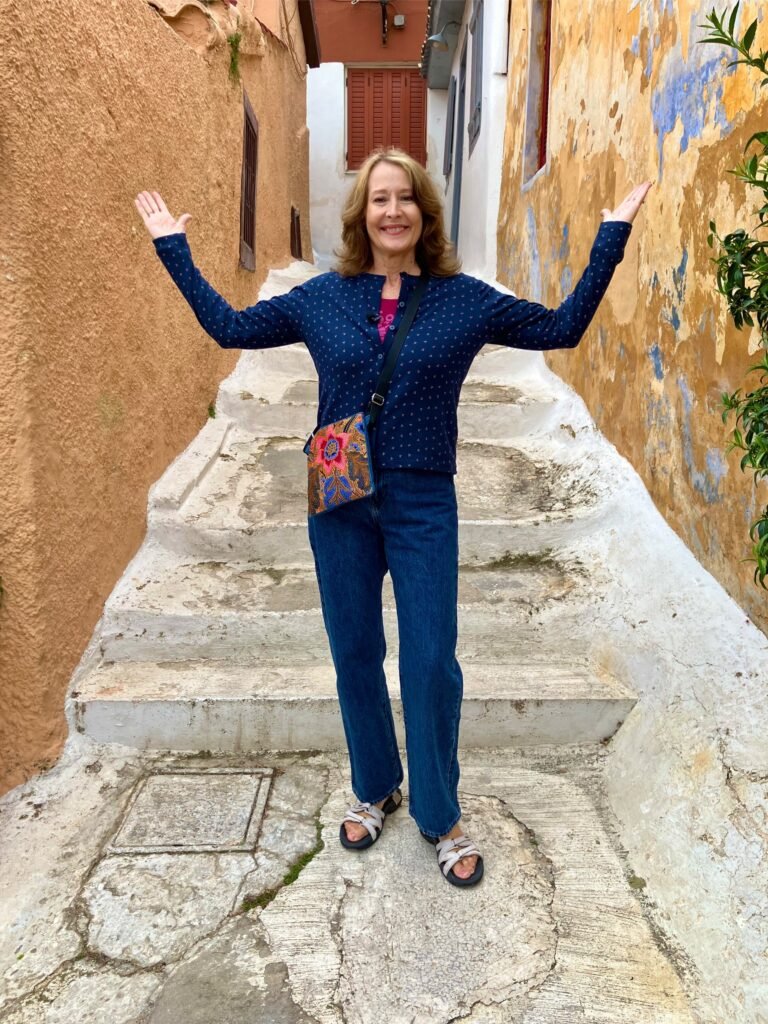
There is no entrance fee here, just be aware that this is a living neighborhood and these are all occupied, private homes, so be respectful if you go.

Changing of the Guard

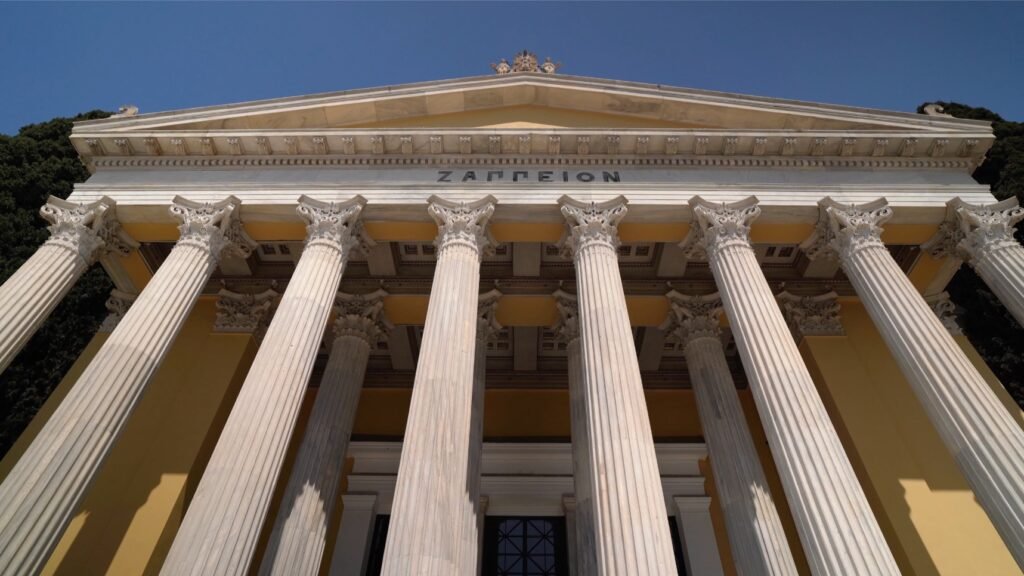
Next, we attended the changing of the Guard at the Hellenic Parliament located in Syntagma Square, right in front of the Tomb of the Unknown Soldier. I had never seen anything like this and I thought it was fascinating.
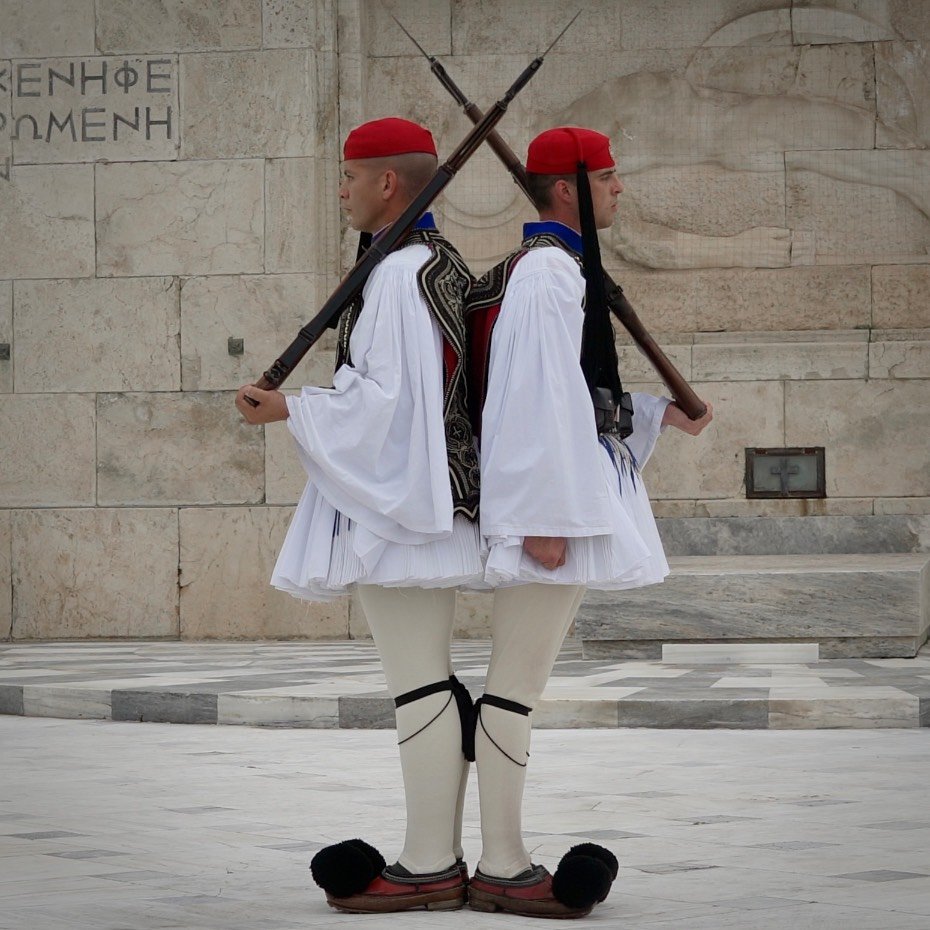
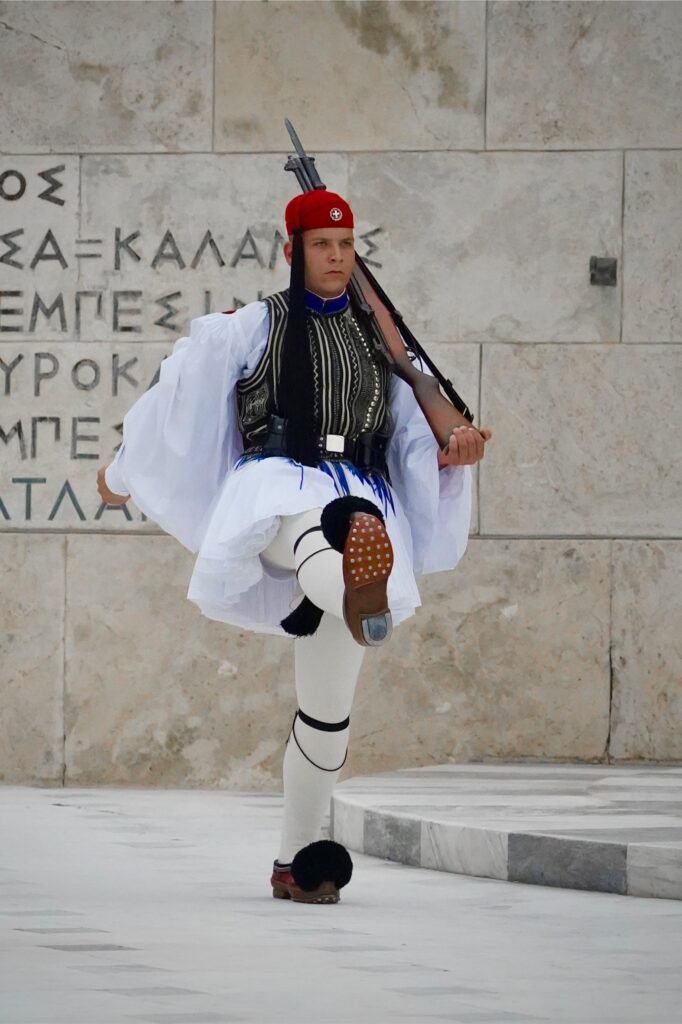
The Presidential Guard, also known as the Evzones, changes every hour, on the hour, around the clock. It lasted about 25 minutes. There is a grand ceremony on Sundays at 11:00 am. We attended one on a weekday and found it to be very intricate and quite a display. This is free for the public to attend. Be sure to arrive early so you can get a good viewing spot. 

The Ancient Agora

Our next stop was the Ancient Agora. This place was massive, it felt like a park. A cat park actually, there were so many cats here. They were all friendly and cared for. We saw food and water bowls all over the area.
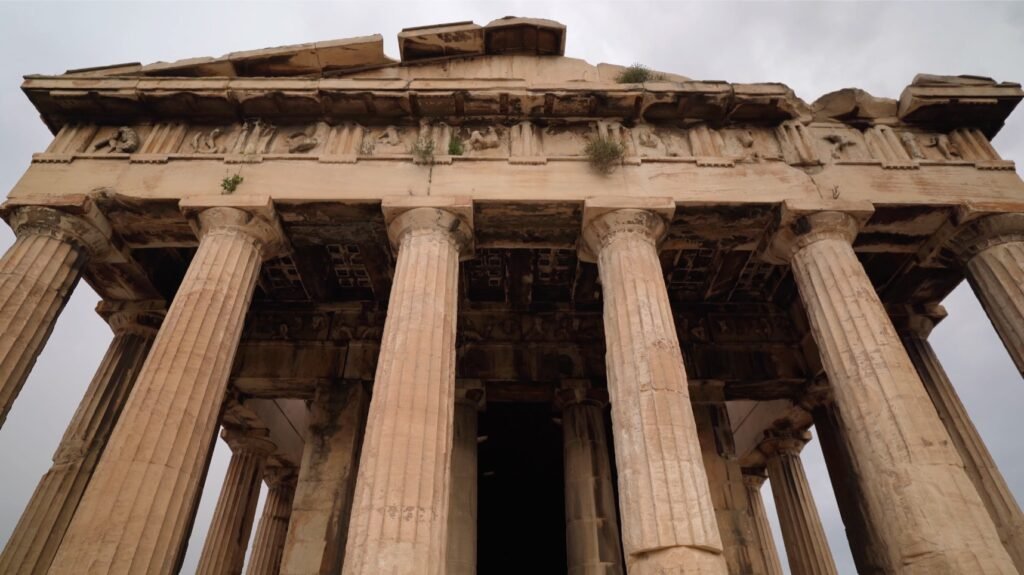
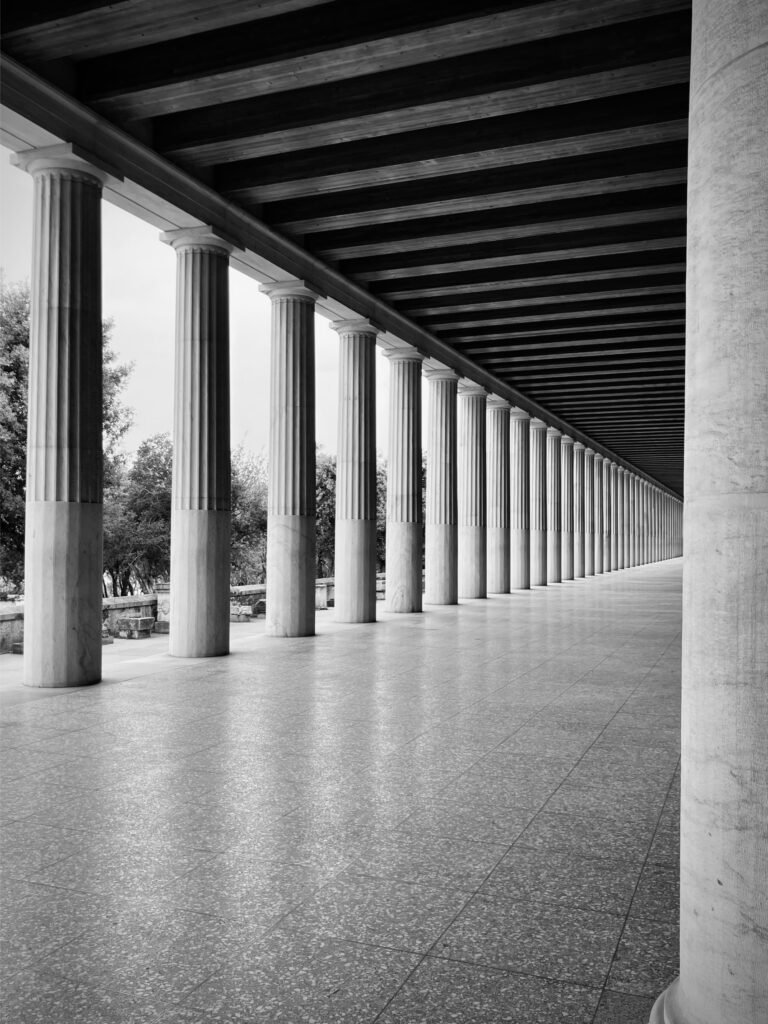
There is an incredible amount to see here. This was part of the ancient city and has remnants of many buildings, the jail, the hospital, private homes and more. The huge Temple of Hephaestus is very well preserved and the main attraction in the Agora.
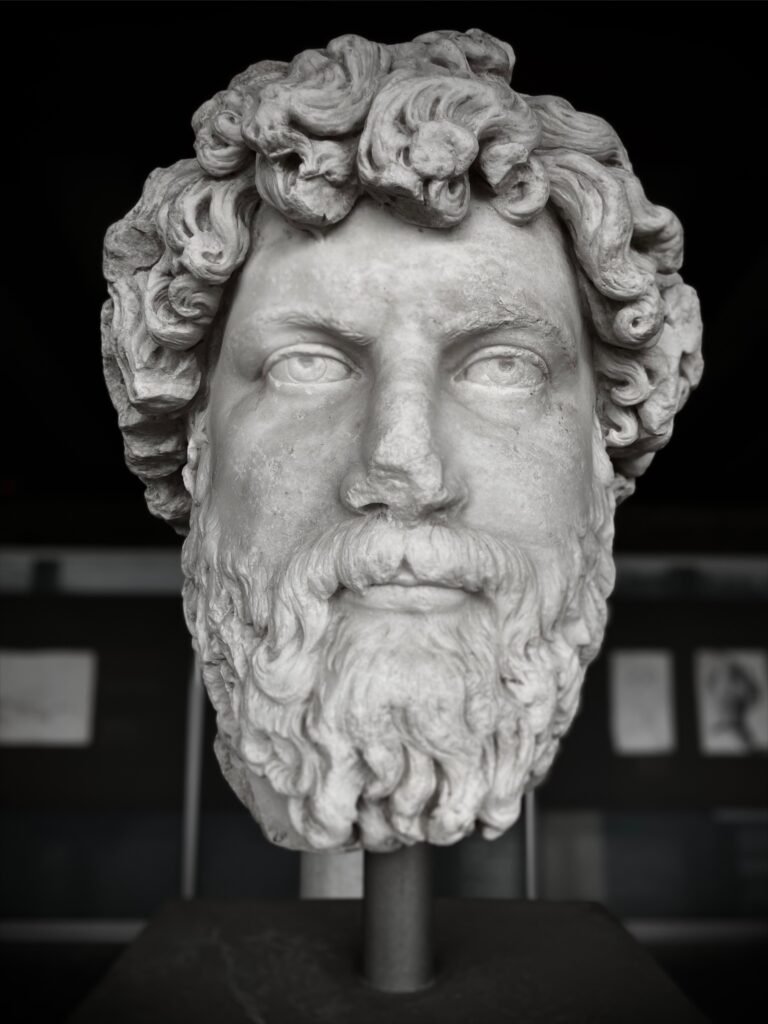
A very impressive museum has been built where the original marketplace once stood and it contains so many ancient relics. Some over 5,000 years old. Sculptures, pottery, burial urns, jewelry, weapons, even an ancient baby’s potty chair! I found it truly remarkable. Again, I was stunned by the level of workmanship that was in existence during these different time periods. Admission here was 20 Euros and that includes the museum.

Philopappos Hill

We also visited Philopappos Hill. On our way there we passed the prison where Socrates was held. He was sentenced to death and made to drink poison Hemlock in 399 BCE. That is mind boggling to me. This cave was also used to hide some of the nation’s national treasures from the Nazis during WWII. It was an easy walk up the hill to the monument of Prince Philopappos who died in 166 CE. His mausoleum is here as well, but it was broken into by grave robbers hundreds of years ago. Also the views at the top were amazing, I could see all of Athens and even all the way out to the sea.
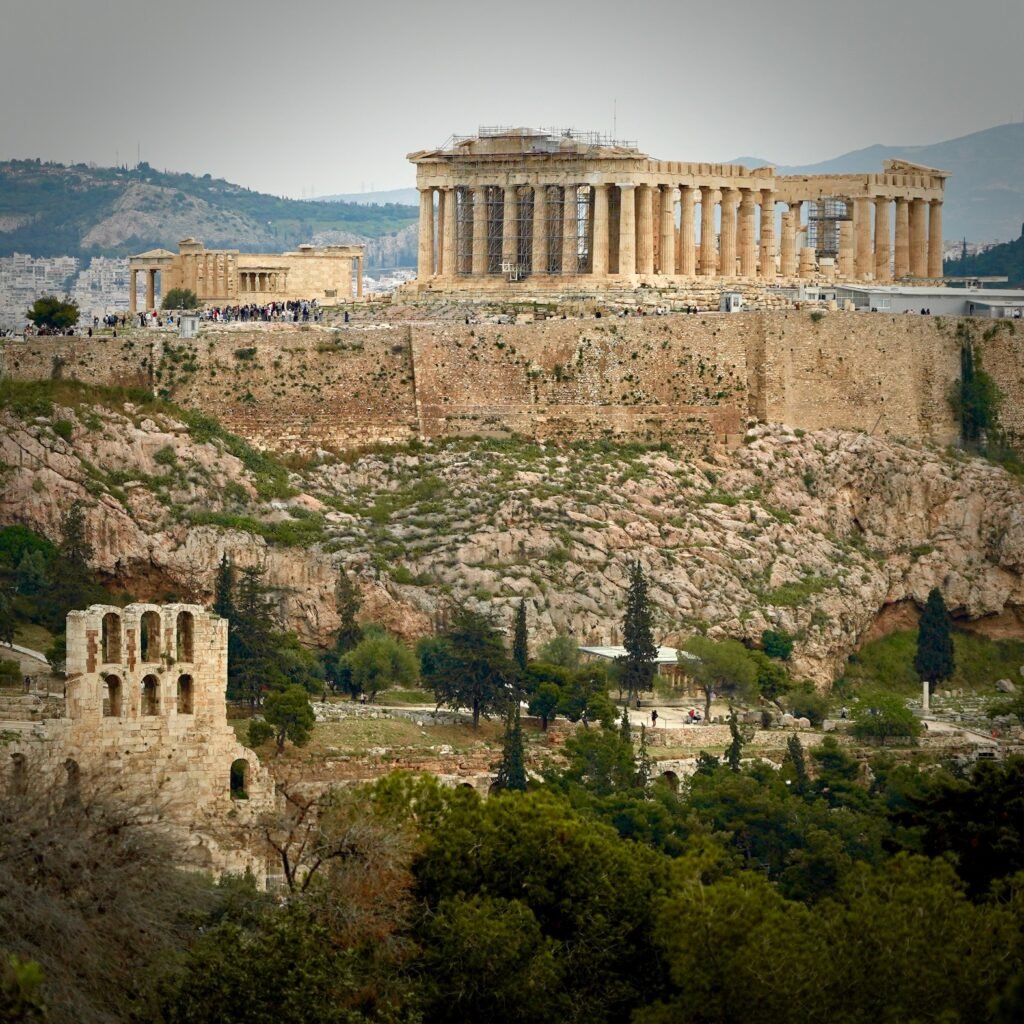
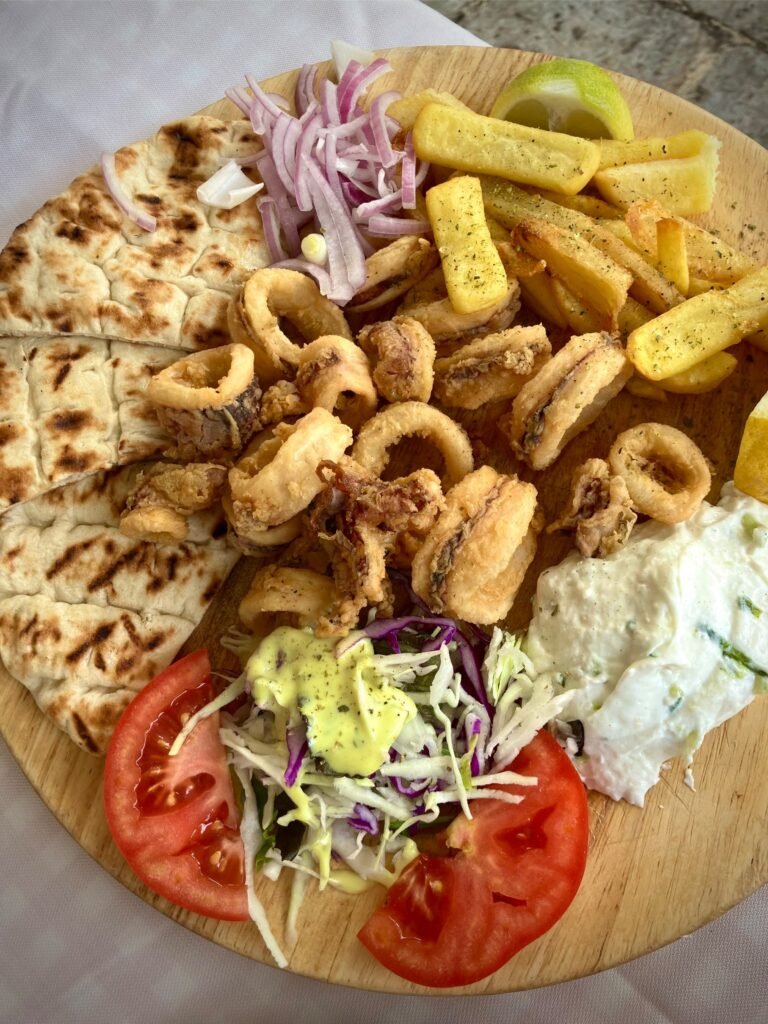
There are many walking trails and benches on the hill so we hung out for awhile up here taking in the views and appreciating everything we were able to see during our time here. We pretty much stuck to the Plaka neighborhood as everything we wanted to see was in walking distance for us. Even Syntagma Square. We discovered a local bakery for Spanakopita and other tasty treats, quaint coffee shops, and lots of great food, both in the tourist area and back in the neighborhood. Athens turned out to be much more affordable than we had originally thought. As with every place we visit, this ancient city definitely has its own vibe, and it was one I fell into very quickly. I absolutely savored my time here. Athens truly is a bucket list destination that I am so grateful we were able to visit.

Our Athens Greece Video Guide!
Rhodes Island Greece Travel Blog

Visiting Angkor Wat & The Ancient Khmer City

I recently visited the the Ancient Khmer Empire of Angkor in Cambodia. A UNESCO World Heritage site, and an active archeological site for more than 100 years. This site is best known by the name Angkor Wat, but Angkor Wat itself is only a part of this massive complex.

Angkor Wat Sunrise

Siem Reap

We took the bus to Siem Reap from Phnom Penh, Cambodia’s capital. You can also fly directly to Siem Reap from Phnom Pehn and many other Southeast Asian destinations. Siem Reap is a very nice, small city and the closest city to the ancient complex. It has a full range of modern accommodations and a great restaurant scene. Something for every budget. There are also many things to do in, and around Siem Reap, if you have a few days to spend here.

Setting the Scene

This was our second visit to the Ancient City of Angkor. On our first visit, eleven years ago, we had an official tour guide. There is so much history and the place is so big that you really do need a guide. You can get one inside, right after they scan your digital ticket at the entrance. We bought our tickets online, and got our QR codes.

Angkor Gates

Our guide was wonderful and full of fascinating information, but you will be going along with the mainstream crowd. The complex is so big that you will need a tuk-tuk to get between temples. Your hotel can easily arrange all of this for you as well. This time, however, we had made friends with the tuk-tuk driver that picked us up at the bus station in Siem Reap.

Angkor Gates

Our drivers name translates to the word “clean”, so he had us call him Mr. Clean and he was our driver for our entire week in Siem Reap. He knew exactly what time of day to be at each temple to avoid the crowds, and wow, did it make a difference. Plus, he took us to many more places we wanted to see in the area, and suggested some other nice sites too. Mr. Clean was really good, almost like our own personal tour guide. 

The Ancient City

Angkor Wat (wat means temple) is just one temple in this massive ancient city, but it is also the largest religious structure in the world, ancient or modern. In the ancient city there are hundreds of ancient temples, 72 of them being major temples, plus various other smaller temples and buildings that were used such as monasteries, hospitals, library, schools, hostels, and so much more.

This ancient city is massive and I am so grateful that my husband and I were able to spend two full days here. Many people just hit Angkor Wat and a few other nearby temples in one day, but if you have time, two or more days is ideal. There is so much to see and so much fascinating history in this exotic temple complex set in the jungle.

Angkor Wat

Angkor Wat

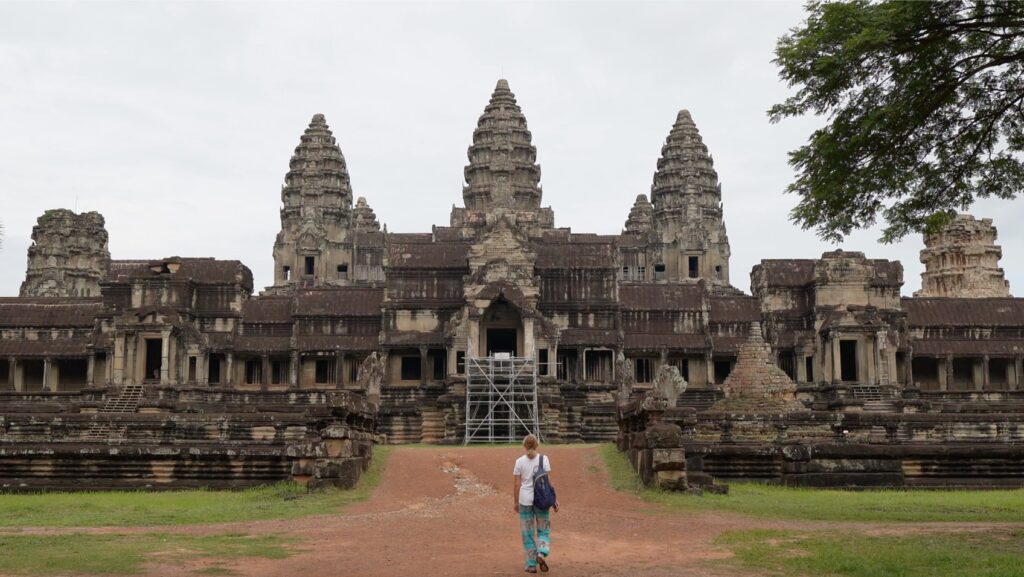
The highlight of the ancient city is definitely Angkor Wat. It is also the symbol of Cambodia and is even featured on the country’s national flag. The Angkor Wat complex by itself covers 402 acres, or 162 hectares. Construction took place from 1113 to 1150, but the city itself goes back to the year 900. Built with the amazing Khmer architectural style, these temple walls are almost half a mile long on each side.

Angkor Wat Moat

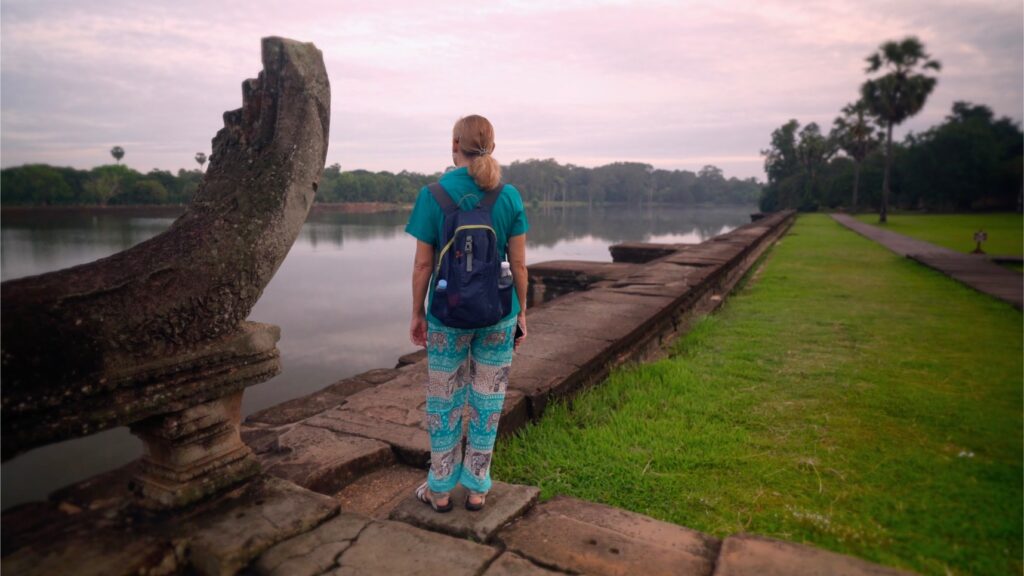
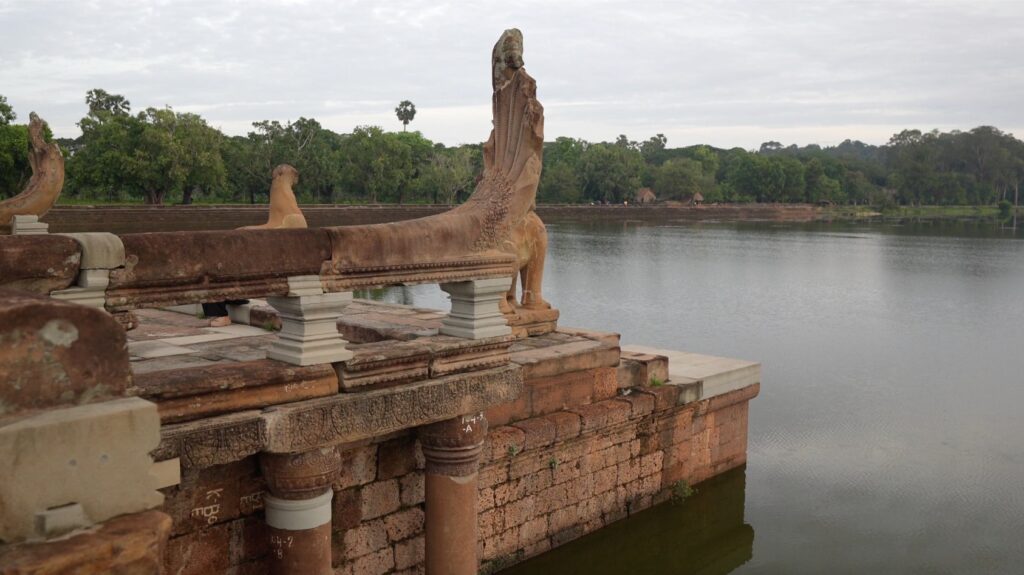
The Angkor Wat complex is surrounded by a magnificent moat that stretches over three miles. Angkor is also known for its advanced water system of canals and holding tanks that brought water from their manmade Lake Baray. This insured the citizens would have water to drink and to irrigate their crops through the dry season.

Angkor Wat East Entrance

This magnificent temple was originally constructed as a Hindu temple dedicated to the god Vishnu. At some point around 1177, the kings wife, who was a devout Buddhist, converted him to Buddhism. This is why Angkor Wat reflects Hindu and Buddhist art in its intricate carvings, statues, and sculptures that can be found across this ancient complex and all around the city. The half mile long walls are intricately carved with scenes depicting Gods, battles, harvests, and everyday life of the King and his court. It is incredibly beautiful and fascinating.

Sunrise at the Wat

Angkor Wat Sunrise

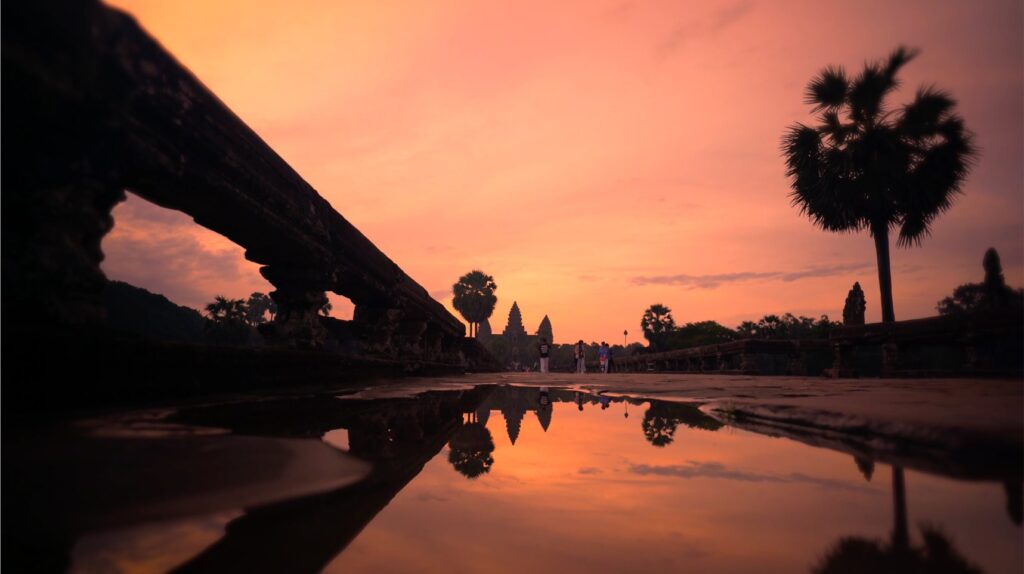
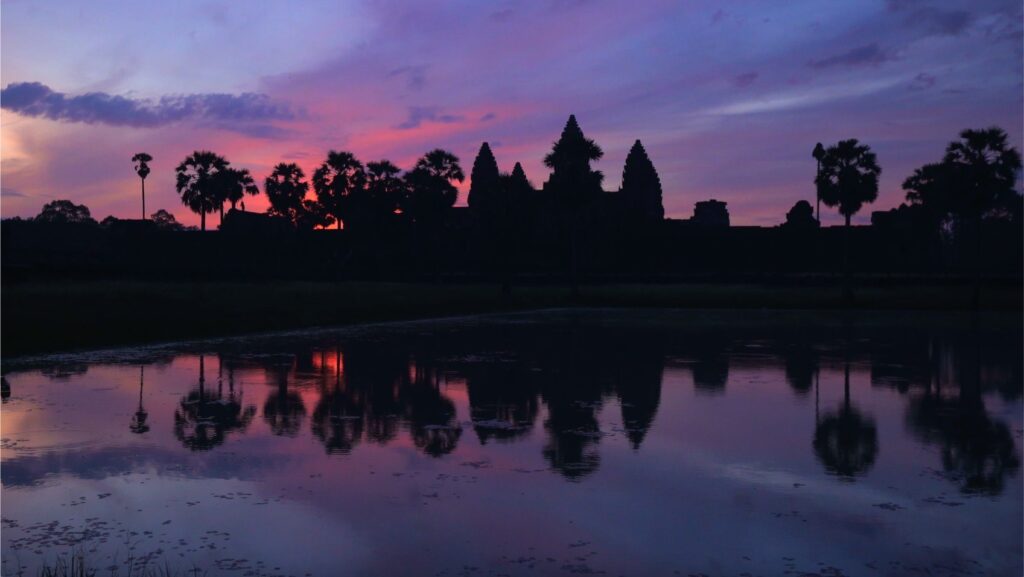
One of the popular things to do is to be in front of Angkor Wat as the sun rises, to see the beautiful colors of the sunrise behind the silhouette of the temple, and also as it reflects off the water. Even though our Mr. Clean had to pick us up at 4:45 am, it was worth it. Following his lead, as soon as we had taken our photos, he had us come back to the tuk-tuk where he was waiting to take us to the next temple. We would return here to Angkor Wat the following afternoon. His plan worked out perfectly.

Angkor Wat

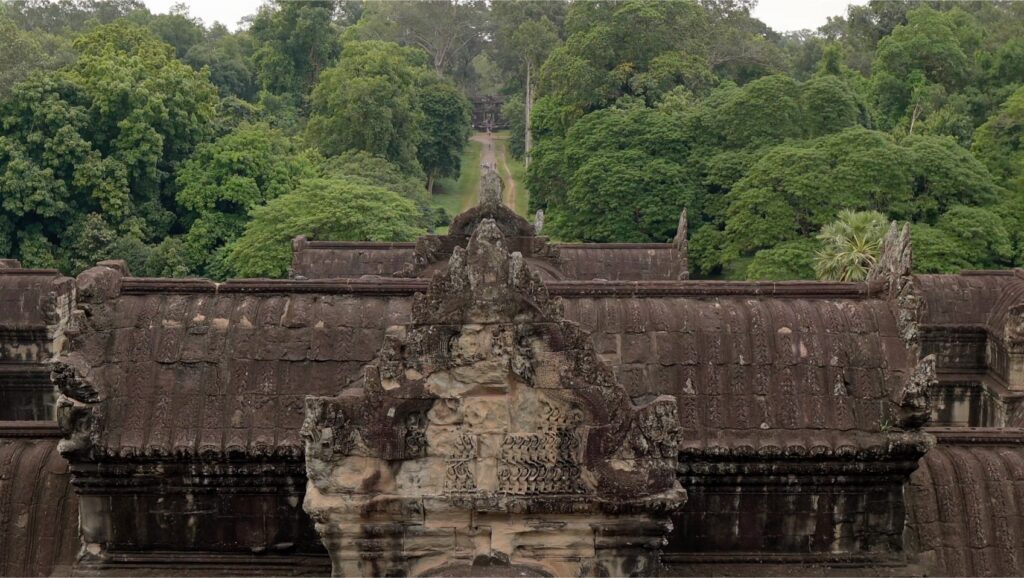
Upon our return to Angkor Wat the next afternoon, we approached it from the back entrance. An equally beautiful and impressive sight. The ride there was so nice, shaded and green on one side of the road and the moat stretching out along the other side.

Angkor Wat Moat

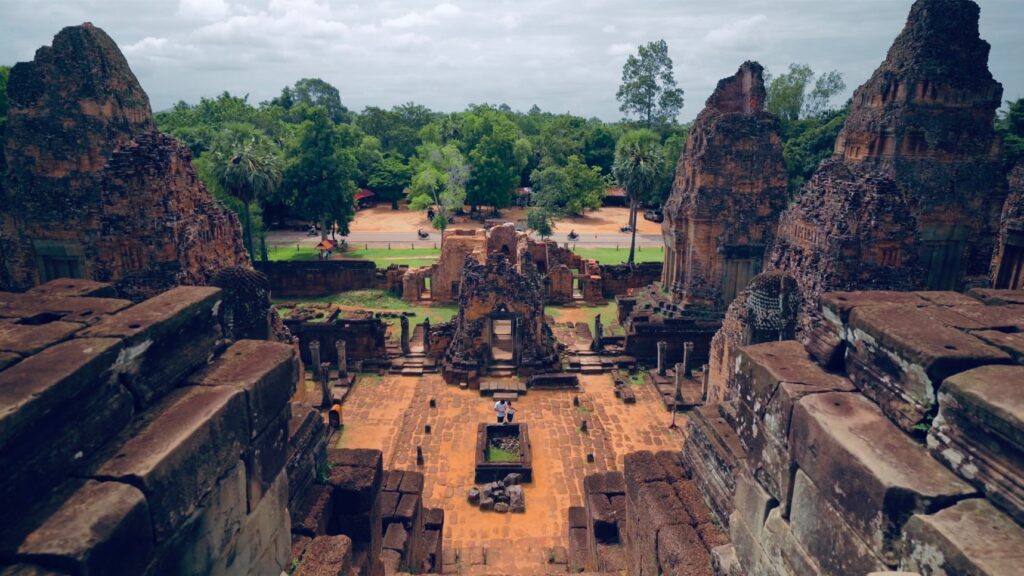
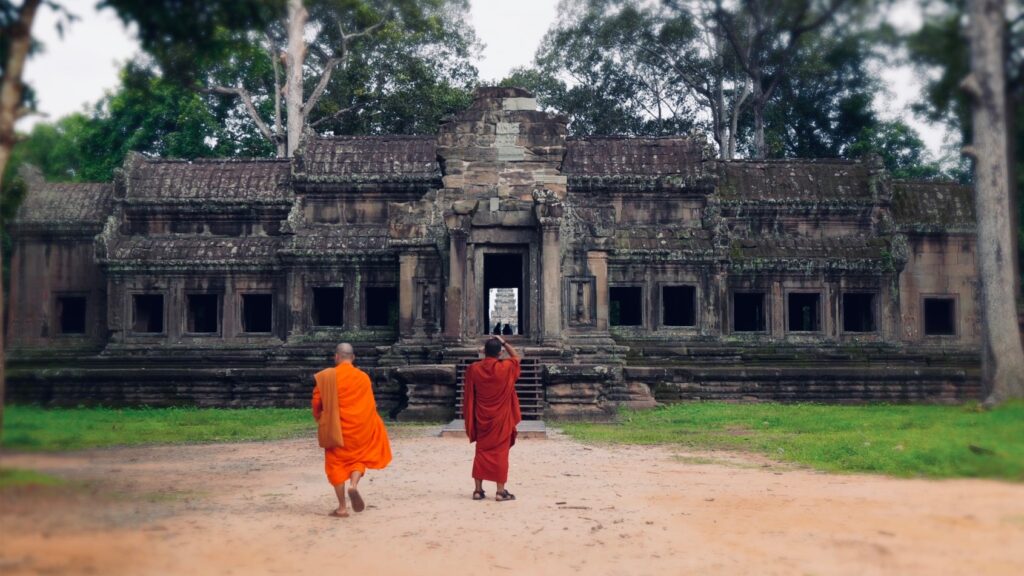
This gave us a great chance to cool down. Fewer people go in from this entrance and we were happy to find fewer people here this time of day. We walked the long, cool, temple halls and climbed the steps up the three different layers to the top, where you can find an inner court yard, beautiful carvings and a magnificent view of the complex from the top. Standing there looking down at the surrounding temples and grounds you can easily imagine what a bustling city this had once been. I also loved seeing lines of monks dressed in their orange robes going across the grounds. This just added to the vibe of the place. 

Pra Thom

Pra Thom

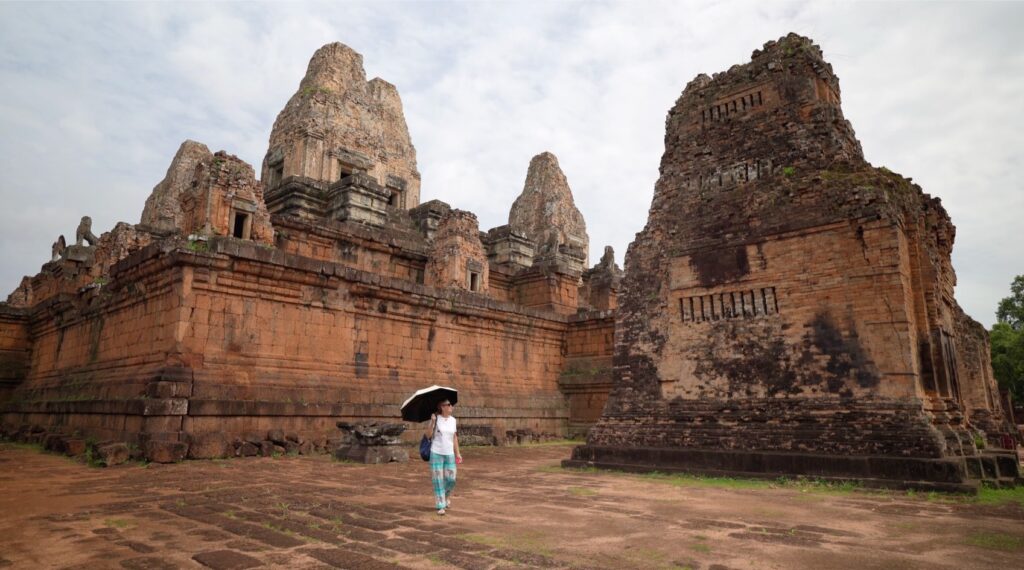
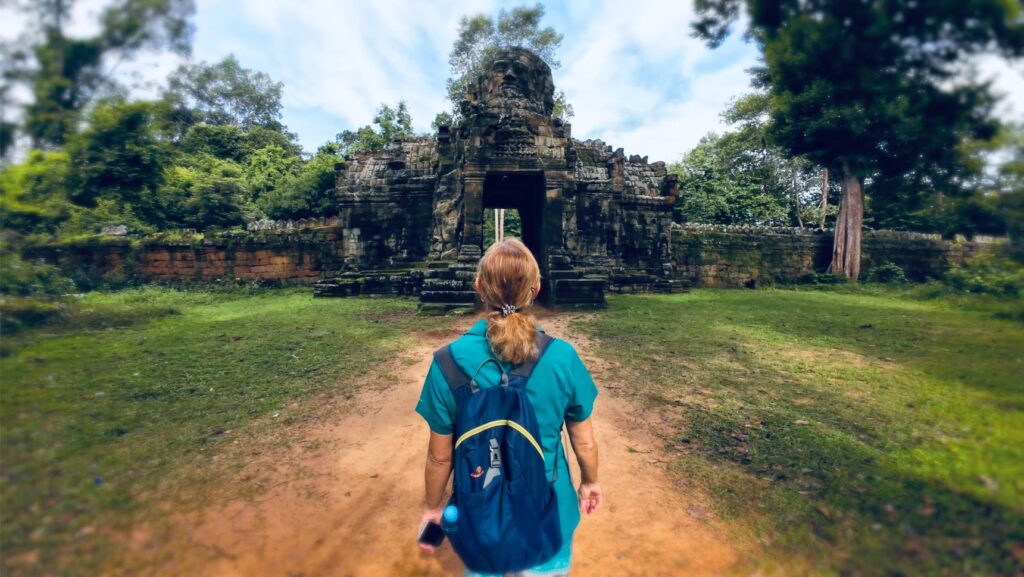
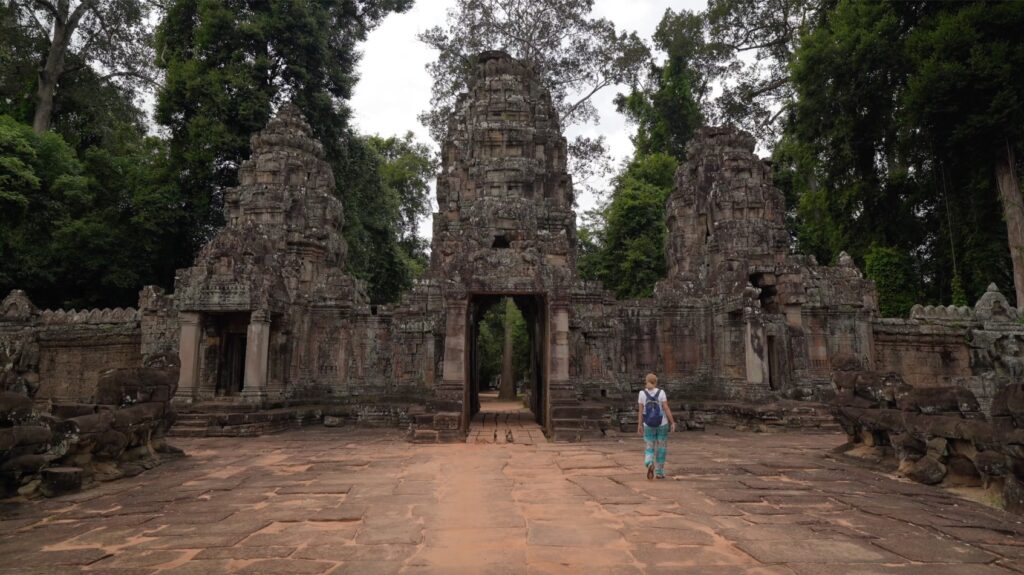
After leaving Angkor Wat on our first morning, we were off to see the Pra Thom Temple, and it is one of my favorites. Mr. Clean knew what he was doing, bringing us here right after we saw the sunrise at Angkor Wat. We had this temple all to ourselves for 45 minutes.

Pra Thom

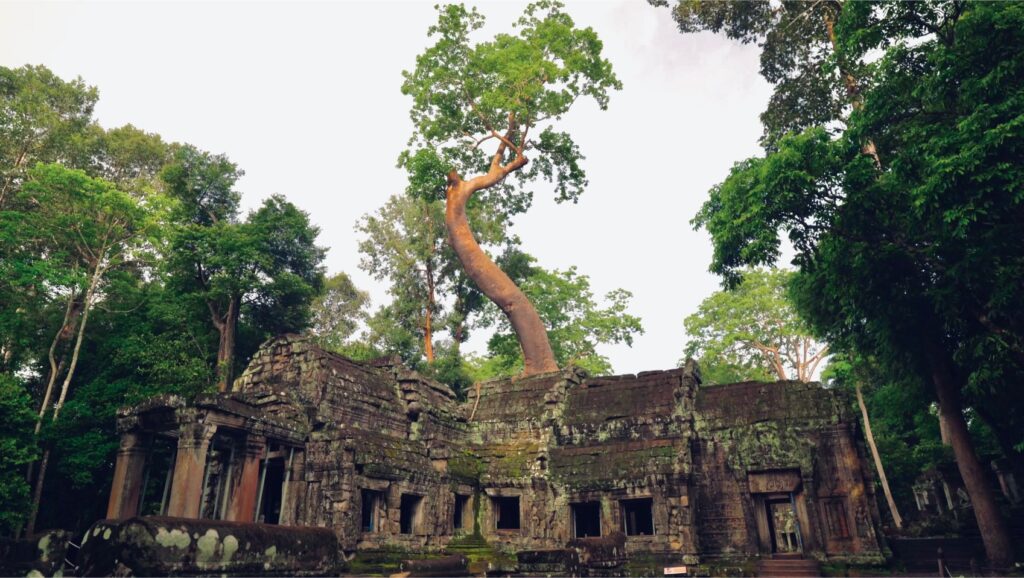
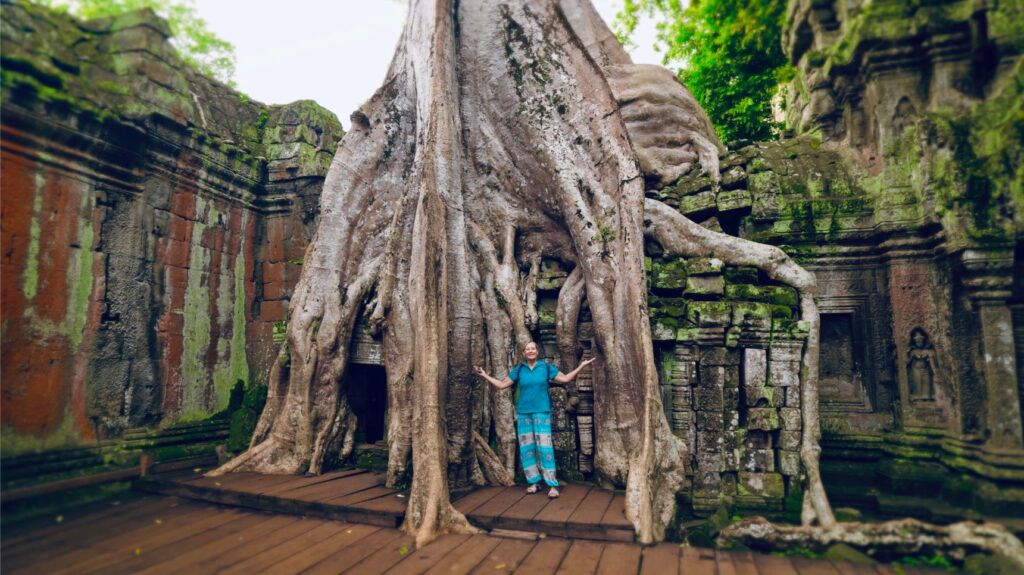
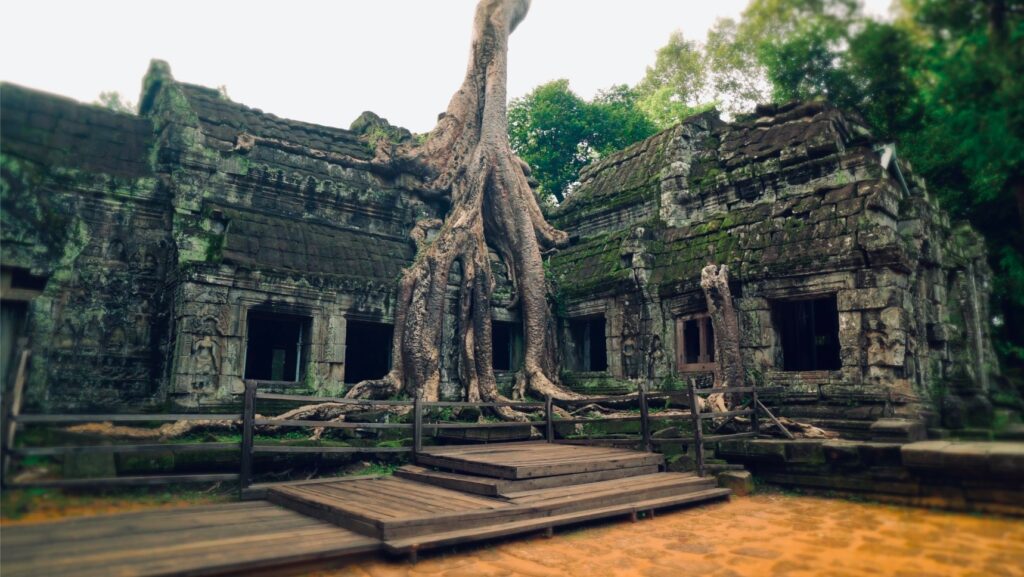
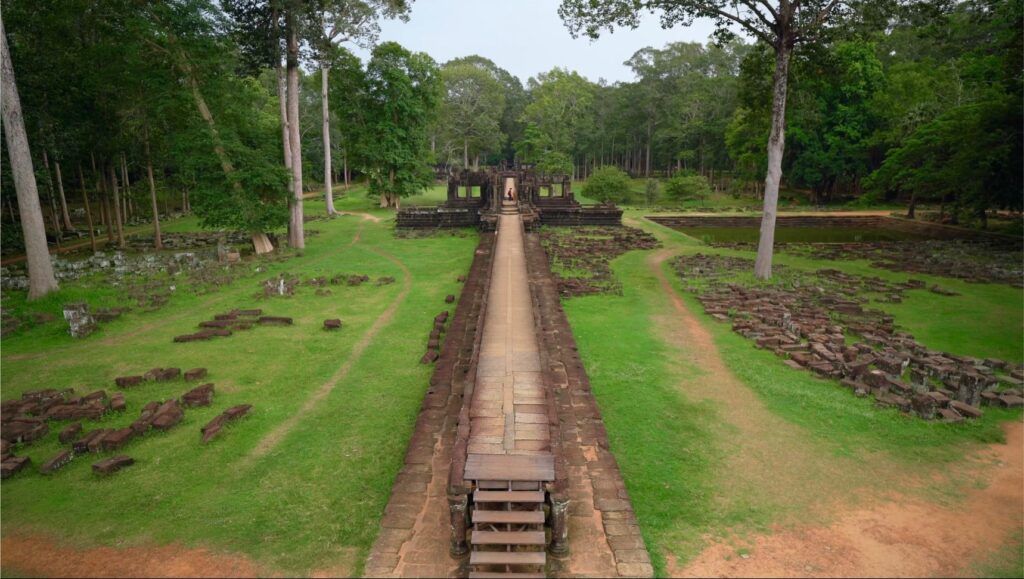
There was literally no one else here except the temple attendants. By the time the tour groups were rolling up here, we were moving on to the next site. Pra Thom was built in 1186 using tightly fitted, carved blocks of stone, with no mortar. Over the centuries this has allowed tree roots to work their way between some of the walls, blocks, and doorways giving this temple a very unique look and feel.

Pra Thom

The massive trees here make it look otherworldly, almost unreal. This temple was used in the 2001 movie Lara Croft: Tomb Raider with Angelina Jolie. When these trees start to die they can actually pull a whole wall down with them. Because of this, the trees are closely monitored now and their roots cut away from the temple if they start to die off.

Pra Thom

Neak Pean

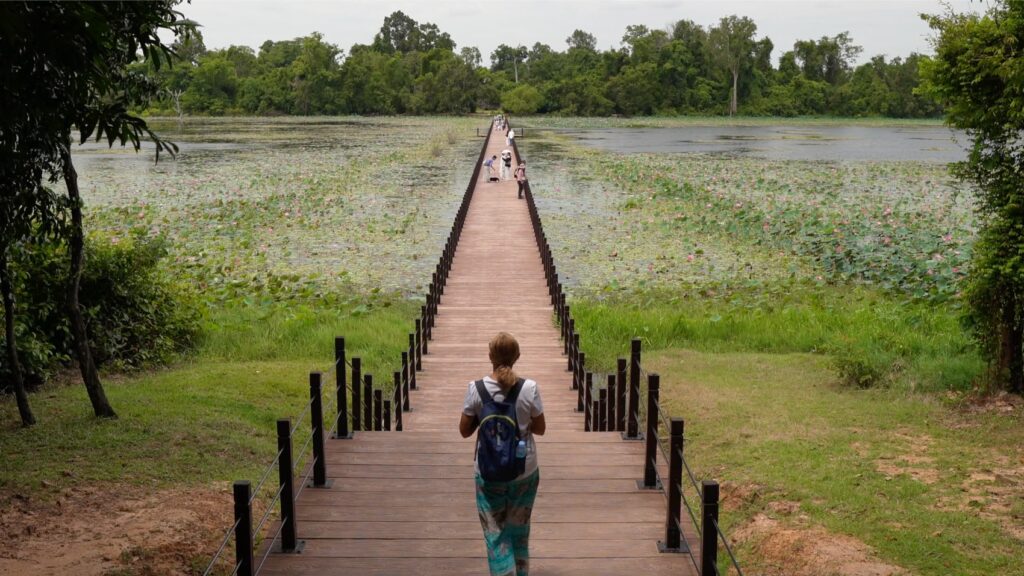
King Jayavaraman VII had 102 hospitals constructed around the city, but one really stands out, Neak Pean. This was a completely different experience as it was built on an island in Lake Baray. A bridge leads you to the island and when I was there the surrounding lake was full of Lotus flowers with lovely pink blossoms.

Neak Poan

In the center of the island is a small temple surrounded by four reservoirs. These reservoirs represent Earth, Wind, Fire, and Water and represent balance in all things. This was a major component in the healing of some diseases, for the body to be in balance. The whole place felt very serene and peaceful. I think this is a must see if you come to Angkor.

Preah Khan

Preah Khan

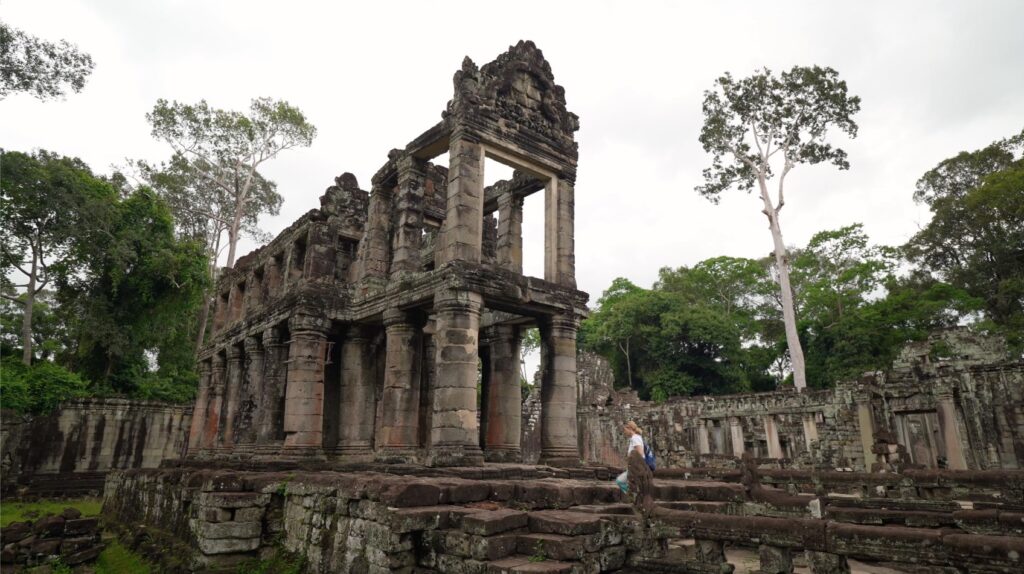
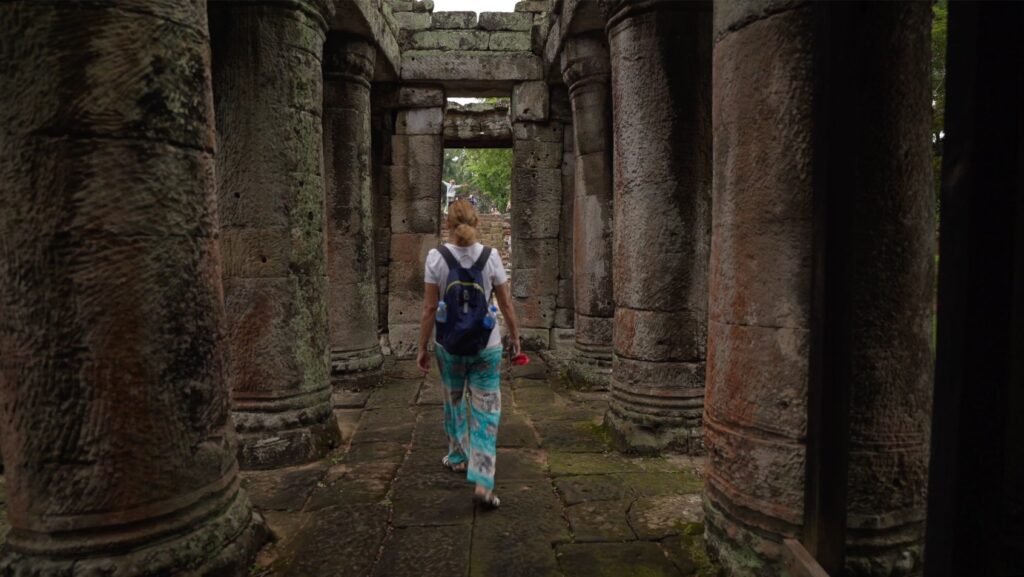
Preah Khan is a section that contained royal palaces, the university, and the Royal Circus, among many other things. It also features a unique building referred to as “the library”. What makes this pavilion unique is that it is the only building with round, Roman style columns.

Preah Khan

No one is sure what exactly this building was used for. But over 100,000 people lived in this particular area of the city. Records that were kept during this time show that travelers and scholars visited here. Buddhist pilgrims came from Japan, and an envoy from China came to study at this university. Portuguese explorers also paid a visit.

Preah Khan

Bayon 

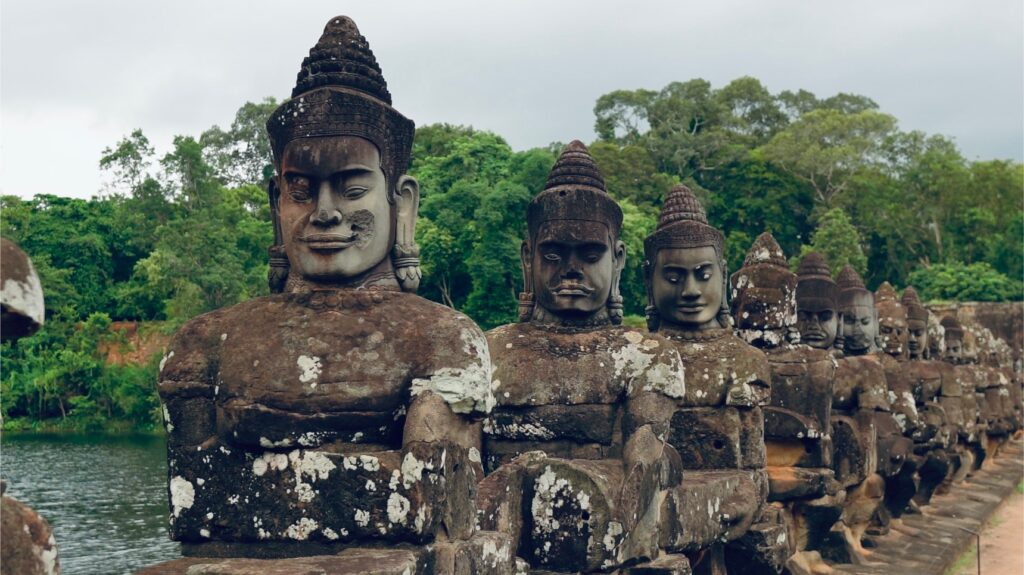
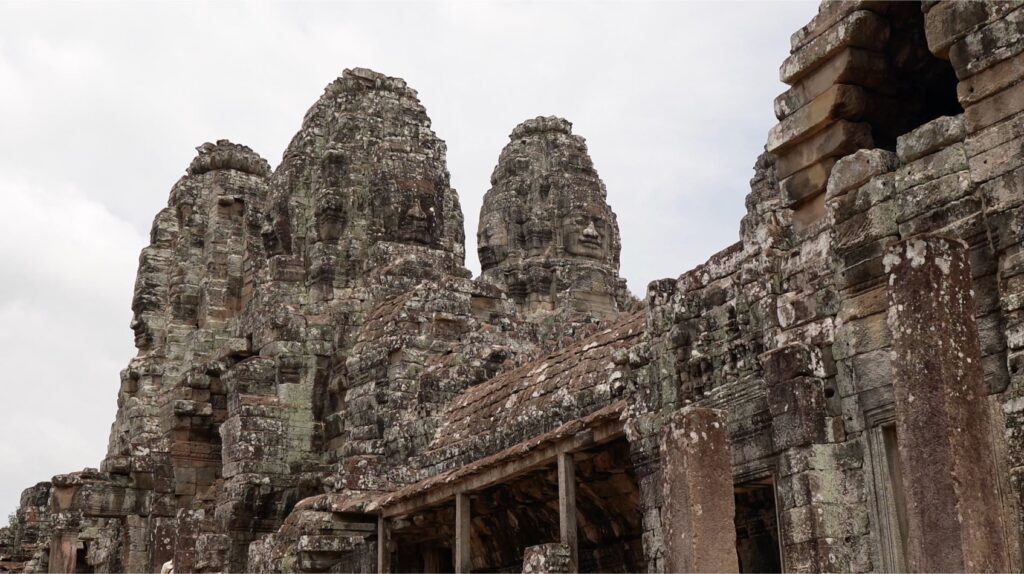
There is one last grand temple that I am going to mention, because I can’t go over them all or this would be a small book, and that is the Bayon Temple. Standing in the city center, it is often referred to as the Temple of 26,000 faces. In actuality there are only 216 faces on 54 different towers.

All of these faces are thought to be the likeness of King Jayavaraman VII. However many faces there really are, it is an awesome sight to see. These benevolent looking, smiling faces all around, make this one of the most popular complexes to visit. There is a type of lichen that grows on the stone at these temples adding even more interest to the intricate carvings.

A True Bucket List Adventure

Many have never heard of the Ancient Khmer Empire of Angkor, and these ruins do receive less visitors than other ancient sites. That being said, more than two million people a year do make it to Angkor. We went in July, which is the low season, it’s hot, but there are fewer people. I do recommend this time of year as I will take the heat over the crowds any day.

OUR ANGKOR WAT VIDEO

There is so much to see in this mesmerizing ancient complex that was once home to over one million people. Even though I’ve been here twice, I still haven’t seen it all. Its location set in the jungle makes it feel like even more of an adventure as you walk through the different temples and buildings. The scale of intricate carvings and statues never ceases to amaze me. In 1860, French explorer Henri Mouhot “rediscovered” Angkor Wat. Although he did not discover Angkor, he just brought Western attention to it. It was never lost to the local people and many temples have been used continuously throughout the centuries for worship and religious celebrations. I realize not everyone is interested in visiting ruins, but if you are, the Ancient Kingdom of Angkor is one of the most epic and impressive places to visit on the planet, and should be on any bucket list.

Rishikesh India: Holy Cows, Yoga & Universal Harmony

We traveled by car from Delhi to Rishikesh. It’s only around 200 kilometers, or 125 miles, but it took about four hours. It takes over an hour just to get out of Delhi. As always, the ride itself is so interesting. The things you can see along the road! I observed many families and people on a pilgrimage to Rishikesh. We saw them in caravans of cars, or in wagons going down the side of the road, and some just walking, all displaying the triangle orange flag and heavily decorated with flowers. I am used to seeing many people on a motorbike, sometimes up to a family of five, but I had never seen one fall off until now.

Ganga River Rishikesh

Our car was speeding down the highway and a motorbike with a family of five passed us, then they hit a bump. A boy that looked to be around 9 or 10 fell off the back of the bike and bounced on his bottom on the highway. He immediately jumped up and ran across our lane in front of us to the median. Our driver slammed on the brakes. By this time the man driving the motorbike had pulled over and a woman had run across to the median. The boy was standing as she wrapped her arms around him, he wasn’t crying but he looked pretty shaken up. This was so scary to me, I can’t imagine how scared he must have been.

Rishikesh is not only a holy city where many people make a pilgrimage to, it’s also the international home of yoga, and one of the first things you notice is how many yoga schools there are here. Many people come here not only to earn their yoga teacher certification, but also to study Ayurvedic medicine, Reiki, Meditation, Sound Therapy, and Chakras. You will see Yogis, Sadhus, Hindu Priests, Gurus, Swamis, Buddhist Monks and Nuns, and a wide variety of people that live on the fringe walking the streets here. We spent our first two weeks in Rishikesh at The Hotel Moksham in the Tapovan neighborhood, which is located at the top of a steep hill. Which you get used to after a few days. Rishikesh is so much more laid back than Delhi, it was a relief to be here. Our hotel was great, the staff was wonderful and they also had a really good restaurant. Unfortunately, the same cold spell that was hitting Delhi was also hitting this area and our hotel was cold! Heaters are not installed in hotel rooms here as they are normally not needed. They gave us extra blankets for our bed and we called it good, but we remained cold our entire stay here, except for the very last day when a warm front came through. The owner of the hotel gave us some really good advice. He said “Don’t make a plan, just see where Rishikesh takes you and go with it.” That is exactly what we did. 

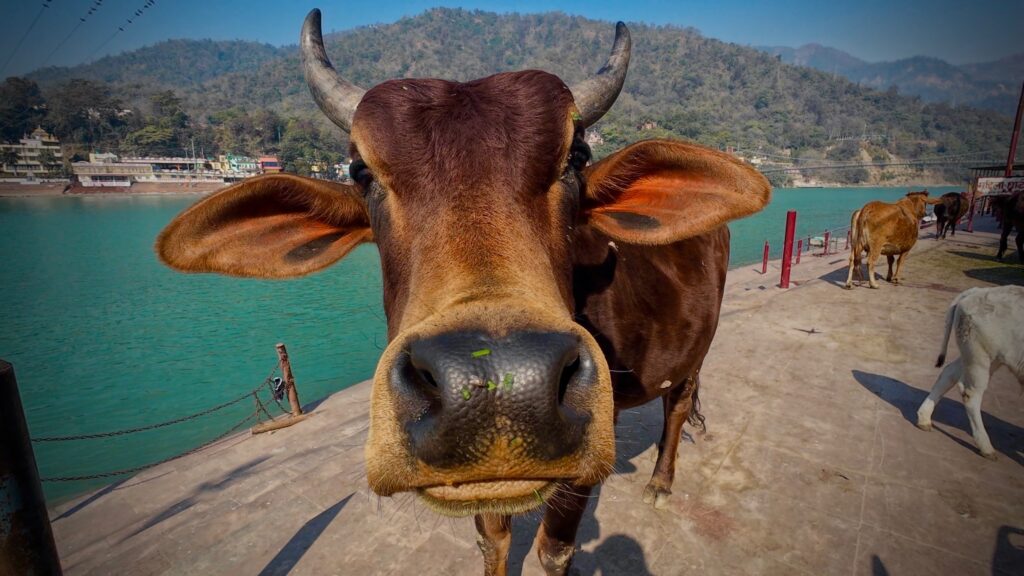
Cows are considered Holy in India and they go pretty much anywhere they want to. There were cows wandering around the crowded streets of Delhi, but not overly many. This was made up for in Rishikesh. There were so many cows here. They definitely make traffic slow down. I actually loved seeing the cows. They are very well cared for here, as they are considered Holy and this is a Holy city. Food waste is separated from other garbage at every home and business. Buckets and troughs of food are put out for the cows, along with water. Cows also know where fresh grasses are left out for them and what vegetable and fruit stands they can get a hand out from. For the most part they are pretty sweet and used to being petted. I loved petting them anyway. Aaron had a run in with one of the biggest Brahma bulls either one of us has ever seen. We had seen this big boy on our street before, and had even commented on his size. Then one night as we were walking back from dinner, we ran right into him. There was a lot of traffic and noise that particular evening and as we were walking by him, he lunged at Aaron, horns down. This not only scared the crap out of us, but all the people around us moved well out of the way very quickly. We kept a wide berth around the bulls after that.

One of the first things we did after arriving was to hike down and see the Ganges River, the mother of rivers here in India. It is considered a holy river, and Rishikesh is considered a holy city. I have seen videos of the Ganges at the holy city of Varanasi (where many cremations take place) and the water looked like brown gray soup, but people on holy pilgrimages bathe in it. The river is much different here, I was so happy to be met with beautiful turquoise green water at the Ganges here in Rishikesh. This is actually the first city the river flows through as it makes its way down from the Himalayas. It’s clean, clear, and beautiful. As we walked along the very wide banks of the river, we saw many men stripping down to their underwear and dipping themselves in the holy waters. Ladies either take some water home in a container, get in fully clothed, or they do have bathing areas for women at some of the temples. The ladies here stay covered up, the men and boys don’t care. After walking some distance along the river banks we came upon a nice, small Shiva statue set among the river rocks. By the looks of it, many people leave offerings of flowers here. You will find many garlands of bright orange marigolds and smell incense burning all along the river, near temples, and entryways to buildings all over town. I think it really adds and exotic feel to the atmosphere. After being here a few days I can say that I really like the vibe of this place. Rishikesh itself is a VIBE, and you can quickly fall into a groove here.

Ganga River Rishikesh

The river splits the city into two sections. One morning we were going to cross one of the iconic suspension bridges here to the other side of Rishikesh and check it out. We found the old Laxman Jhula bridge shut down and a new one under construction. After 94 years of service it was found to have structural damage. Originally built in 1889 by Rai Bahadur, the bridge had to be rebuilt in 1924 due to severe flooding. When the wealthy Rai Bahadur had the bridge built, he had a stipulation written into law that stated the bridge, and any replacement of it would never be able to charge a toll. It was to remain free for all people to use, and it remains that way today.

Since this bridge that connected two parts of the city is closed, we decided to take the ferry boat across. There is another suspension bridge, but it is quite a ways from here. For .55 cents we took the motorboat, but had to wait for 45 minutes for it to completely fill up. That was fine, chillin’ by the riverside on a nice morning fit right into my schedule. It was one of those things you just have to go with. I found this section of Rishikesh across the river to be smaller. As far as we walked, it was made up mostly of ashrams, temples, hotels, souvenir shops, and some restaurants. While walking down the main street we decided to stop at a lemon soda cart. These vendors have very unique shaped glass bottles into which they add fresh squeezed lemon, sugar, and carbonated water. They put a marble into the bottom of the bottle and as the carbonation builds up, it pushes the marble to the top of the bottle and seals it for safe keeping. It was interesting to see how he opened the bottle and the lemon soda was really good. It’s a treat you stop for more than once! After checking all of the area out we had a good lunch at a restaurant called “Harry”. When it was time to return back across the river, we thought we’d do a river tour, having seen these small speed boats going up and down the river. But, the guy at the ticket booth either couldn’t understand what we wanted or just didn’t want to sell us the tickets. A young couple standing behind us, that spoke excellent English, asked us to ride in a private boat with them, so at least we didn’t have to wait for the ferry boat to fill up again. They were very kind and we had a nice conversation.

After wandering the narrow streets and alleyways of RIshikesh for a couple of weeks, we  rented a cabin in the mountains called Chamba Nest, about an hour out of town. Here we celebrated Aaron’s birthday and our 20th wedding anniversary.

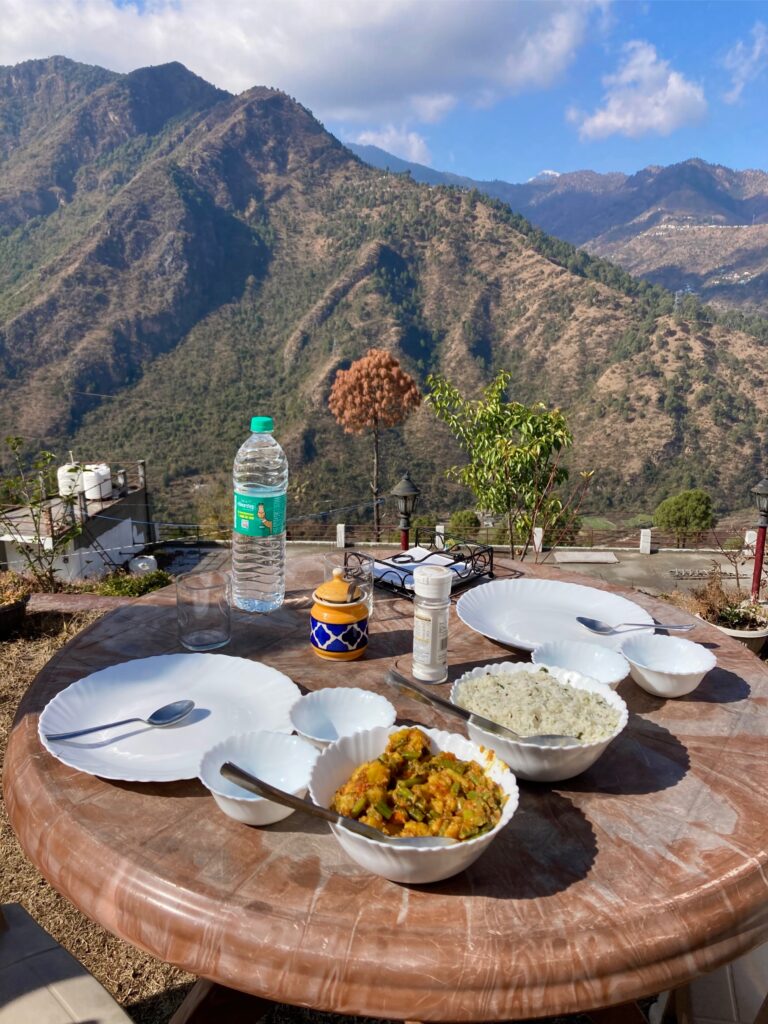
Chamba Nest View

It was in a beautiful location and came with a caretaker and a cook. It was still cold, but they provided an electric heater for our little cabin. We were able to get out and do some hiking and we had great food that we could order from a menu. The cook, Rajendra, was amazing! I had not told the host about Aaron’s birthday, but I guess they noticed it while taking copies of our passports. At dinner time on his birthday, we went into the dining room and they had a table all decorated and a birthday cake, with candles, for him. We were both so shocked! It was so wonderful of them to do that, unasked! We really appreciated it. I had told the host about our anniversary and had asked for a cake to be provided.
A few days later on the big day, we went down for dinner and they had the dining room dimly lit and all decorated with candles and beautiful lamps. The caretaker, Vinod, had made a hand printed “Happy Anniversary” poster and hung it on the wall. There was a fancy cake and many little tea lites scattered around the table. They made it very romantic! Of course we shared the cakes with them. Their little bit of English was much better than our zero knowledge of Hindi, but we seemed to understand each other perfectly. They made our stay here very special.

Upon returning to Rishikesh we settled into a nice Airbnb apartment called Yogvan Holiday Apartments. We loved everything about it, except again, it was located at the top of a steep hill. After 4 or 5 days this hill got easier, so I guess it helped me with some cardio. Being on the 4th floor, I was glad it had an elevator. It seems like so many places that we stay, we have to climb multiple floors of stairs, or walk up a big hill. I know it’s good for me, I think I must be getting lazy. We were close to a great Yoga studio that I set out to at 6:45 am, every other morning. Through a construction zone, across a cow pasture, up a hill, and there I was! My guru’s name was really long so he told me just to call him Viki. Two hours of yoga and meditation in his class really set me up to have a good day. Best of all, the classes were only $3.00 each for a two hour session.

Getting an early start one morning, we decided to hike down to the Ram Jhula Suspension Bridge. Built in 1986, the Ram Jhula iron suspension bridge is an iconic landmark here in Rishikesh. Similar to the Laxman Jhula bridge being rebuilt downstream, the Ram Jhula is much larger and longer. There is a lot more going on down by this bridge as compared to the Laxman Jhula.

We wanted to visit one of the most iconic temples and ashrams in Rishikesh called the Parmarth Niketan. Built in 1942 this ashram has 1,000 rooms that they provide for people, from all over the world, coming here either on a pilgrimage, to do yoga or earn their yoga teaching certification, meditation, reiki, acupressure, to learn Ayurvedic medicine practices, or receive ayurvedic treatments. They offer a safe, clean, spiritual atmosphere along with low priced rooms and meals. I was impressed, the buildings were simple but nice, the complex had nice gardens and large grassy areas. The temple itself is across from the ashram and has a 14 foot Shiva statue sitting in meditation over the river, as the highlight. It also had a large and impressive Hanuman statue, and a very intricate marble carving of Krishna in his chariot. After strolling through the complex, we headed back towards the bridge and decided to stop for some lunch.

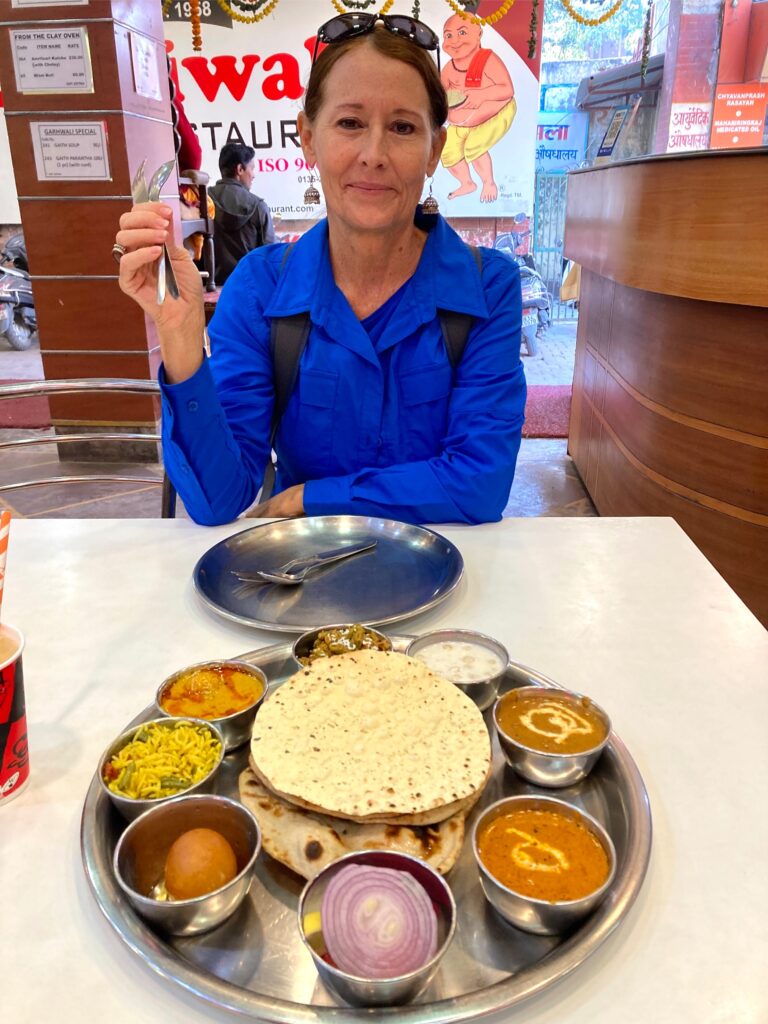
We had read about a legendary place we wanted to try called Chotiwala. A Chotiwala is a Brahmin cook to wealthy or royal households. The Chotiwala mascot for the restaurant is depicted with a very large, bald man, dressed in a costume and with a painted face. He sits on a throne in front of the restaurant and you can take a selfie with him if you want, but he doesn’t talk or smile. We ordered the traditional Indian Thali set here and it was pretty good. Some street children ran into the restaurant and came to our table wanting food before they were ran out by the manager. Aaron saved some chapati bread to take out to them, but of course they were no where to be found when we left. We were out by the riverside and Aaron was taking some pictures when a pretty big, black faced Languor monkey crept up behind him and slowly pulled his bag of chapati out of his camera bag. Aaron felt it at the last second, but to late, the monkey had sat down and torn the bag open and was eating the chapati breads. Very cute, but very sneaky too! 

Another morning we set out and did a major hike over to the Chaurasi Kutia Ashram, better known as The Beatles Ashram. I didn’t really know what to expect, I knew it had been abandoned for a really long time, but you still have to pay to get in and look around. I certainly was not expecting it to be such a massive complex.

Beatles Ashram

During the 1960s and 70s, this was the International Academy of Meditation, a training center for the students of Maharishi Mahesh Yogi. A former physicist, Maharishi Mahesh is also the person that developed the Transcendental Meditation technique. Not associated with any religion, this meditation technique teaches you how to clear your mind and focus on whatever you need to focus on in your life. It must have worked for The Beatles because they wrote most of the songs for their White Album while they were here. This was their most productive period as songwriters. They met the Maharishi after attending a lecture he gave in London, and he invited them to the Ashram, where they spent 3 months. 

Spread out on over 18.5 acres, the meditation complex contains 127 individual rooms with private bathrooms. These are very cool looking, each being built from river rock, round in shape, with the bedroom and bath on the lower level, and stairs leading to an upper level where there is a small egg shaped meditation dome, and an outdoor terrace if you wanted to meditate or just sit outside. There was also the Chaurasi Kutia itself, which is a building with 84 individual meditation caves.

Chaurasi Kutia literally means 84 domiciles or 84 caves. This is what the ashram is named after. In addition to these constructions, there are also 3 huge, three level dorm room style buildings, classrooms, libraries, kitchens, dining halls, lecture hall, study halls, laundry, vegetable and herb gardens, and even small houses for families. The Beatles stayed in a large house at the back of the property. You can roam the complex at your leisure and take in all the interesting artwork that has been done over the years, in various rooms throughout the complex. Some walls are painted with the lyrics of Beatle’s songs as well. It was a very interesting place and had the most chill vibe. We wandered around for several hours and just took it all in. There are beautifully decorated, egg shaped chambers on top of each dorm building, where you also get an amazing view of the Ganges River below and the stunning forest covered mountains behind.

We had read online that it would cost 600 rupees, or $7.25 to enter. When we arrived, the sign at the ticket booth said 1,200 rupees, or $14.50, double the price we were expecting. We were a little shocked and kind of miffed. The ticket booth agent told us that the increase had just taken place because the ashram complex is now managed by the forest department and considered part of the Rajaji Tiger Reserve. The ashram complex remains heavily fenced off from the surrounding area so you even if there were a tiger in the area, it couldn’t get into the ashram complex area. There are plans to restore parts of this heritage site and turn it into a wellness and meditation area. Currently, there is a small snack bar to get drinks and snacks inside, along with restrooms. Even though it ended up costing more to enter, it was still inexpensive. It was a really great place to visit and is definitely the best modern, abandoned complex I have ever visited.

Beatles Ashram

When we first arrived in Rishikesh it was still quite chilly, or just down right cold. One sunny morning we decided to walk to Nim Beach on the Ganges River. The river beaches are very big in areas and quite popular to visit. The far end of Nim Beach is covered with large boulders and backed by forest covered hills. Also a great place to watch the cute black faced Langur monkeys. We were sitting on a boulder, soaking up the warm sun and watching the river rafters going by. It looked like great fun, but I knew that water was like ice coming straight out of the Himalayas. I stated to Aaron, “You’re not getting me in there, it’s to cold!” But after being here a few weeks the weather started to warm up drastically, and the rafting looked like such fun.

Rafting the Ganges

So we finally decided that we were going to do it. We were going to raft the Ganges! We have rafted in several countries with the most epic, and terrifying, being the Zambezi. At least here we wouldn’t have to worry about crocodiles if we got tossed out of the boat. Our Airbnb hosts made it super easy by arranging it for us. We were picked up at our door at 10:00 am, and brought back after we were done. Talk about service! Our first stop was at the rafting center, we had to fill out a form, and we were asked if we wanted to rent wet suits. It was so warm out that we declined. Then we were back in the truck and off to the river.

Rafting the Ganges

You can do river trips of various lengths and I had chosen the mid-range trip of 16 kilometers. As we were walking up to the rivers edge and our guide and driver were carrying the raft down, we plainly saw that we were putting in right below a class 5 rapid. I was actually very glad that we missed that one! We got our life jackets, and helmets on, were handed our paddles, and off we went. It was just Aaron and I and our river guide. It was great fun! There were a few rapids that made me hold my breath or squeal, but it was mostly just a fun ride down the river. Our guide tried to get us to hold onto a rope and jump in and float beside the raft. Not without a wetsuit, probably not even then for me! The river was flowing so fast that our raft trip was over before we knew it. It truly was a beautiful river trip, the water of Ganges here is so clean, clear, and beautiful.

Rafting the Ganges

The river valley is lined with steep rock faces, boulders, and forested hillsides. All to soon we were pulling in to Nim Beach and being loaded back into the truck and driven home. It was a terrific half day adventure, and all for only $8.00 per person! Back at our Airbnb we were looking at videos other rafters had posted to the raft companies website. There were two videos of 6 and 7 foot long King Cobras swimming beside some rafts. They are a snake that fishes. Then there was another one of a python swimming by a raft and he looked at least 10 feet long. These videos were taken right here in Rishikesh. I am so glad I did not see these videos before I went rafting! Snakes aside, I am really glad we went, it was a lot of fun. Now I can say that I have rafted the Zambezi and the Ganges! Will I get to add rafting the Nile to the list? We shall see.

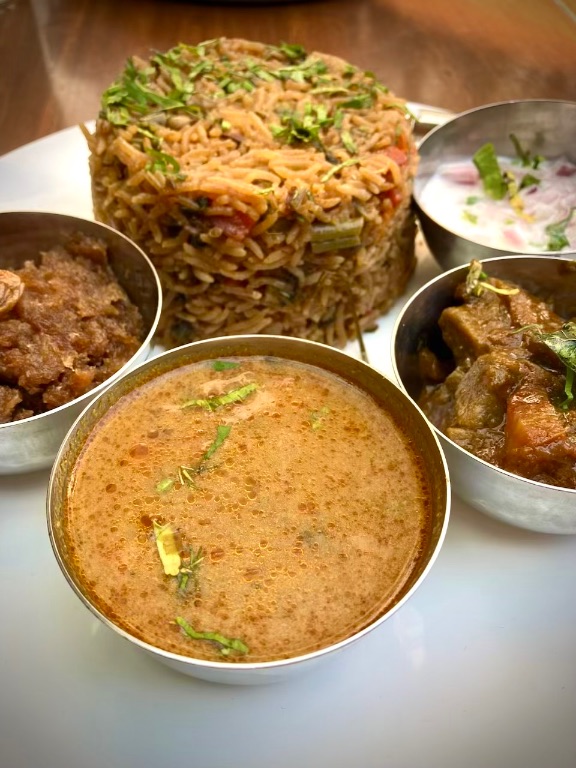
Being considered a holy city, Rishikesh is also an alcohol and meat free city. Both places we stayed in Rishikesh did not allow any meat or alcohol to be brought onto the premises. On Google Maps we found two beer and wine shops outside the city limits, and a place that serves chicken. So we were vegetarians for the two months we were here. I have to say that it was not a big deal, the food in India is so delicious and they know how to make a proper vegetarian meal.

I discovered Lemon Chaap, Tandoori Momos, the most fragrant Biryani, and so much more. It really puts the vegetarian food we’ve had in all other countries to shame. We never felt like we were missing anything either.

We had a lot of wonderful seafood in Goa, and outside of that we actually didn’t eat much meat anywhere in India because the vegetarian food is so delicious. We never got the dreaded “Delhi Belly” either. I hope I am able to recreate some of these dishes myself later on down the road.

Check Out Our Guide To Rishikesh India Video

The Taj Mahal – A True Life Love Story and one of the most beautiful buildings in the world.