
 farawaynowtravels.com
 Recently I made my first trip to Greece and I was lucky enough to get to visit two Greek islands. My first stop was the Island of Rhodes and I was blown away.
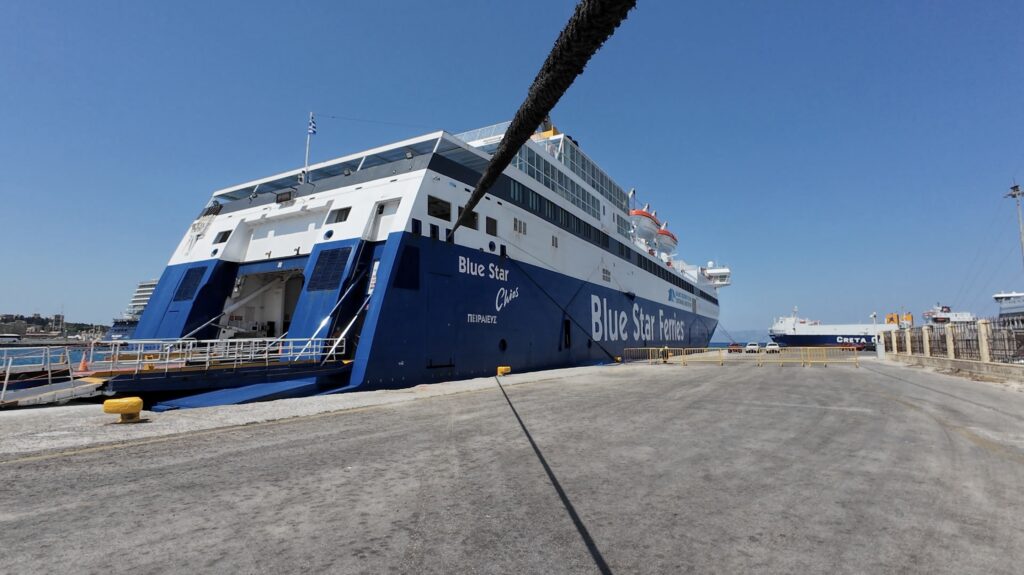
I took the Sea Dreams Ferry from Marmaris, Turkey to the Greek island of Rhodes. It only took about an hour and cost $43.00. The ferry had comfortable seating, air-conditioning, nice restrooms, and a small kiosk to buy drinks and snacks. Before I knew it the ferry was pulling into the ancient port in the Old City of Rhodes Harbor.
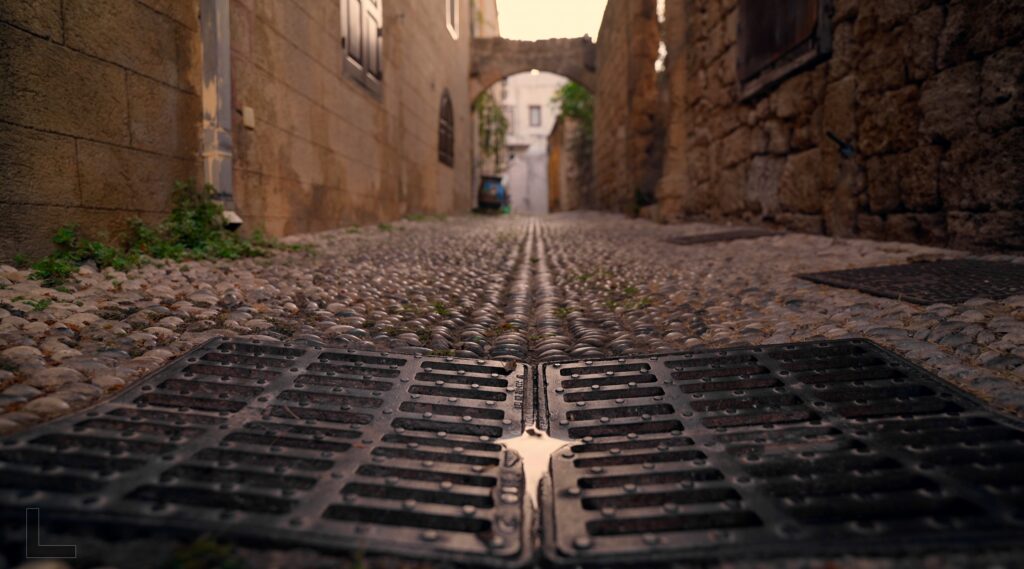
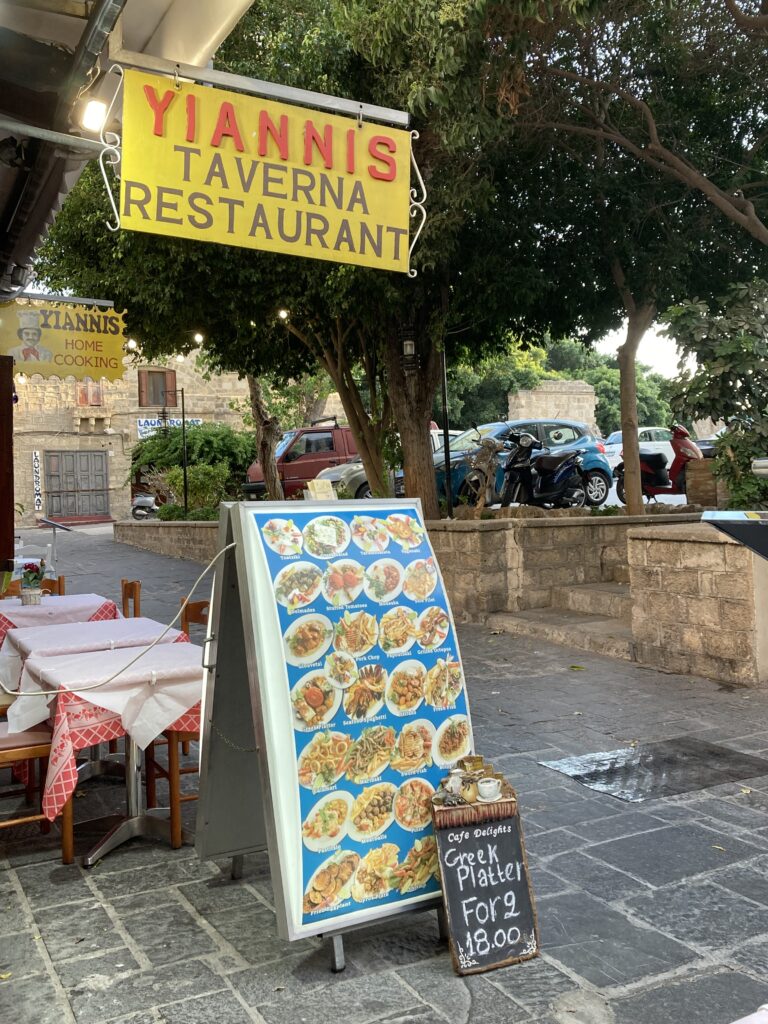
I stayed at a nice boutique hotel in the old town of Rhodes, which is contained within the ancient city walls. As it turned out, from the harbor, I was in walking distance to one of the historic city gates that led right to our hotel. Once you pass through the gate into the old town, it is pedestrian traffic only, except for the odd motorized cart making a delivery. These ancient cobbled streets were not built with cars in mind.
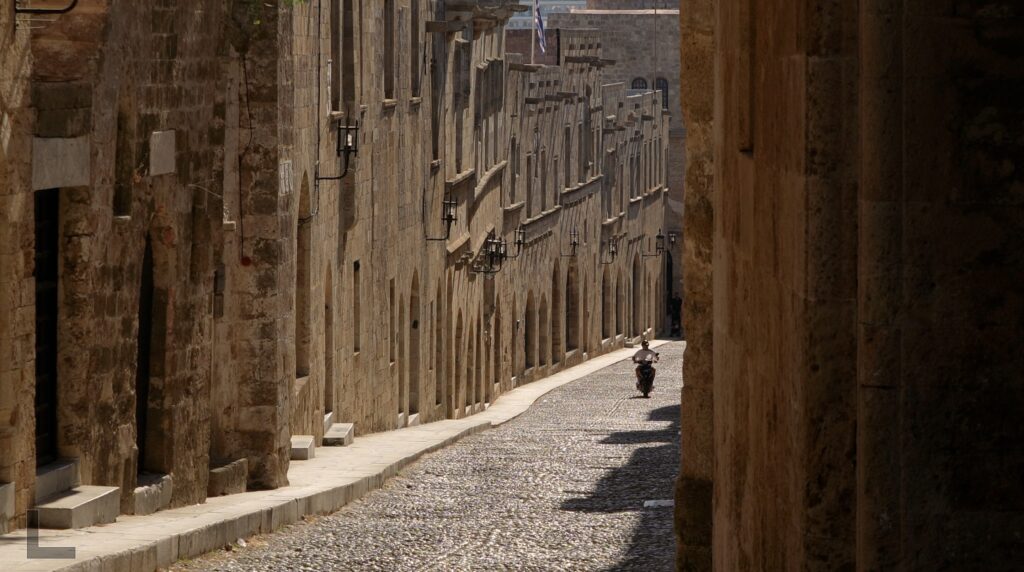
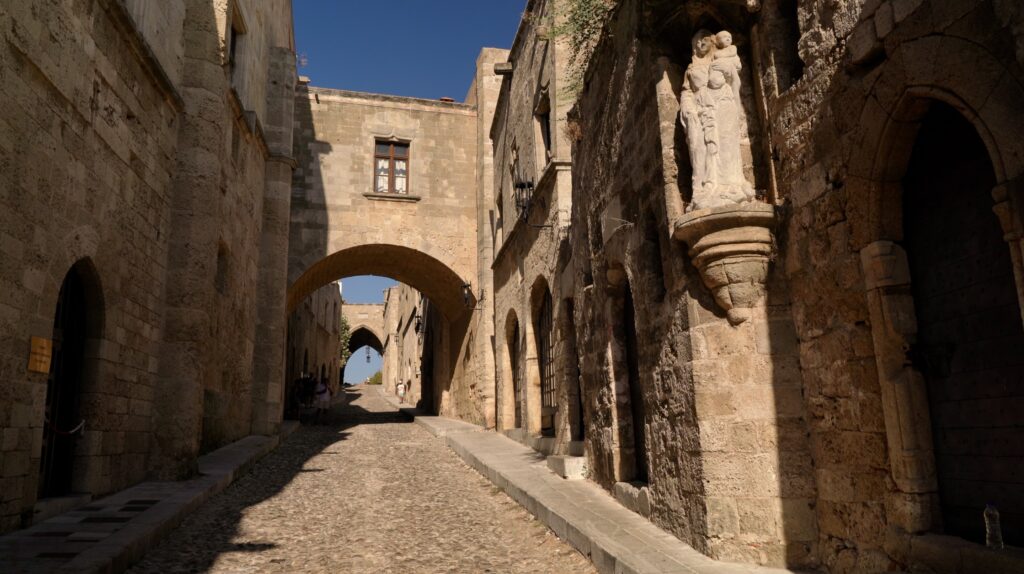
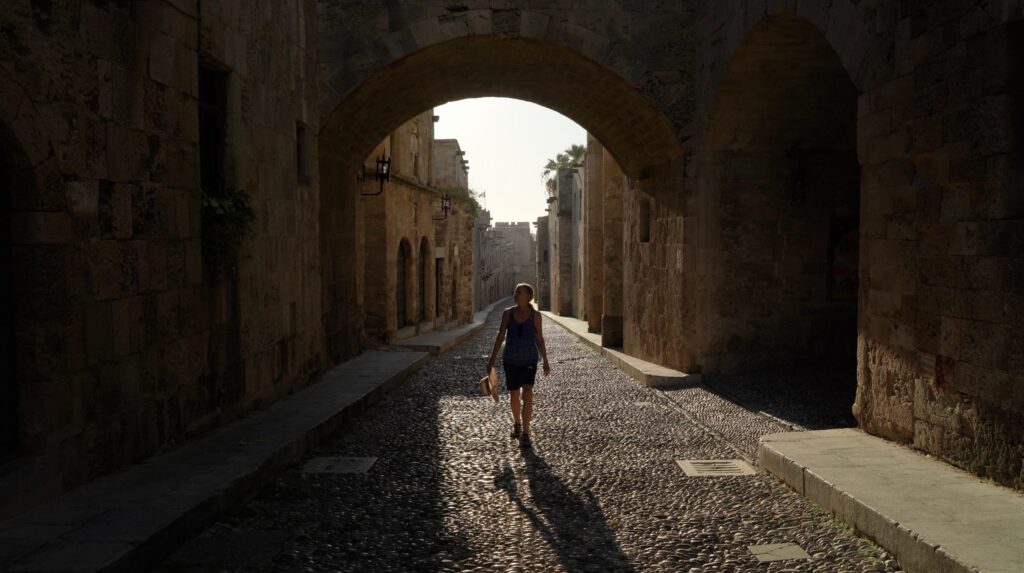
Rhodes Old Town is a living museum containing centuries of history. History buff or not, you can’t help but appreciate its beauty and historical significance. I felt as if I was walking through time as I headed up the Street of the Knights of Rhodes. This 600 meter long street begins at what was originally the hospital and ends at the Palace of the Grand Master. In between there are seven Inns. One time residences for each of the Knights of St. John Hospitaller.
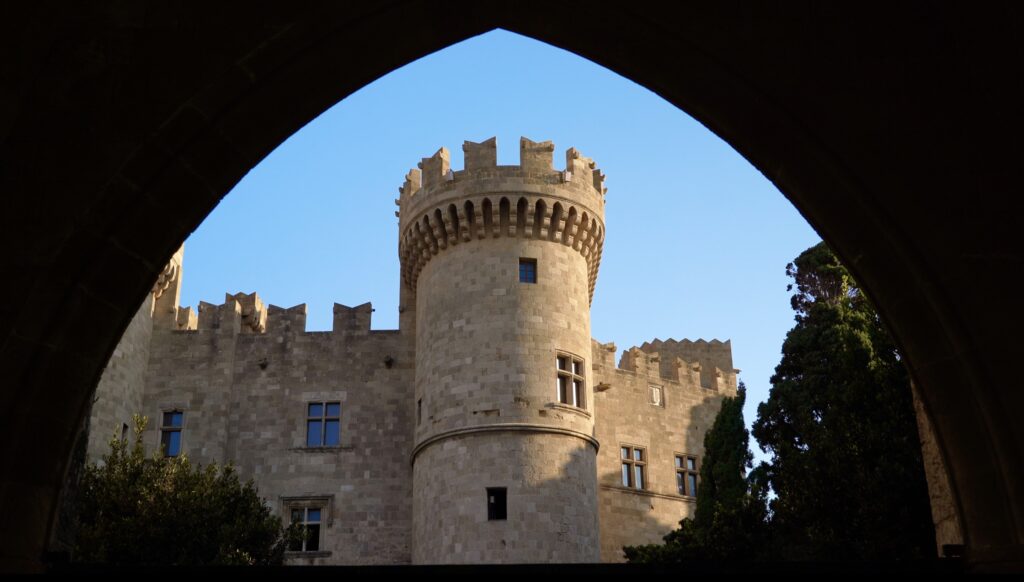
Originally built in the seventh century as a Byzantine Citadel, 600 years later, in 1309, the Knights Hospitaller conquered and occupied Rhodes, taking it over as their administrative center and Palace of their Grand Master (head of the Order of Knights). The Order of Knights of St. John of Jerusalem were a military and religious order which fought in the crusades to defend the Holy Lands. This order still exists today helping the sick and the poor internationally. There is even an ancient hospice here that was for elderly knights and knights injured in battle.
The palace is grand. I felt as if I had walked into a story book. This beautiful palace has 154 rooms, 24 of which are open to the public and showcase antiquities. Of special significance are some frescos by renowned artists along with great sections of the floors paved with ancient mosaics of Byzantine and Roman art. There are many statues from the Greek and Roman era both inside and out in the gardens. The furniture and tapestries on the walls were outstanding. For 10 Euros a person you can get a combo ticket that includes the Palace and the Archeological Museum, which is not to be missed either. The artifacts there are amazing!
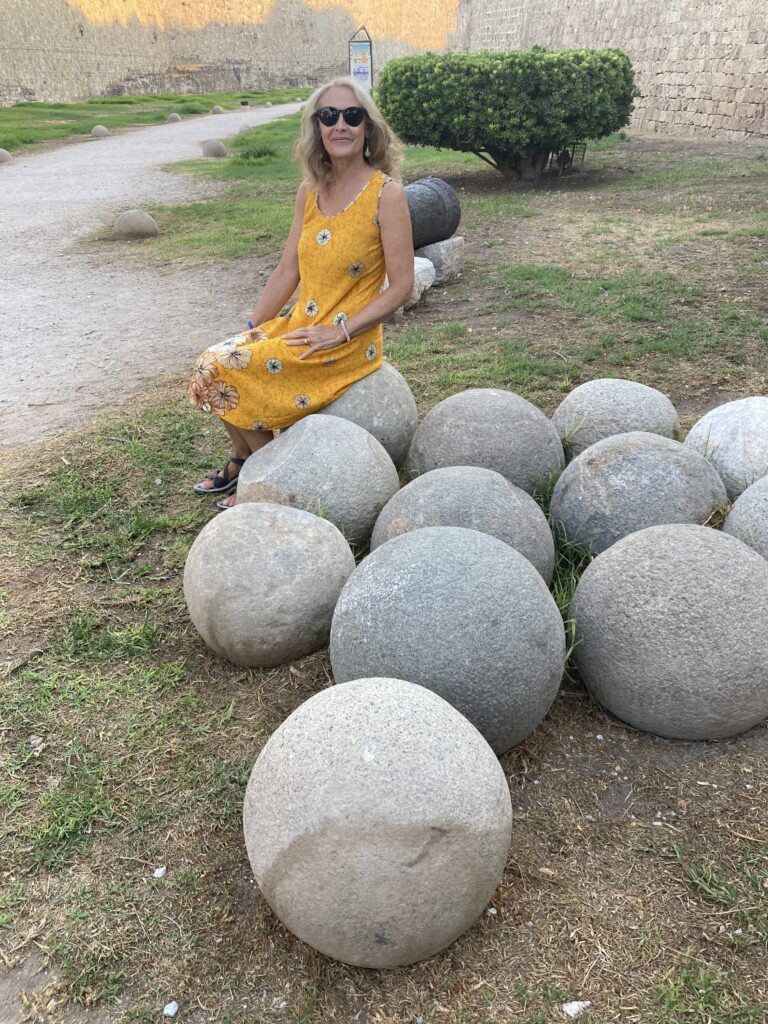
Going back as far as 305 BC, Rhodes was already enclosed by walls. Then the Greeks and Romans added more fortification when they took the city over. And again in 1309 when the Knights Hospitaller took over, they added even more. Things like forts, towers, and an amazing moat that encircles the old city. Dry now, with a walking path through it, you can still see hundreds of enormous stone balls that were hurled by catapult at the city walls during countless battles that took place here.
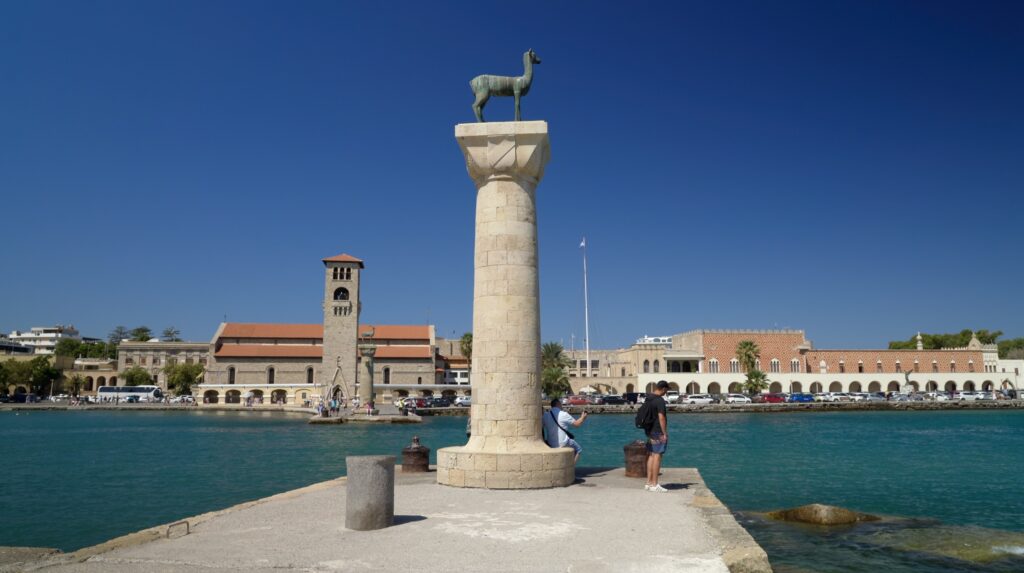
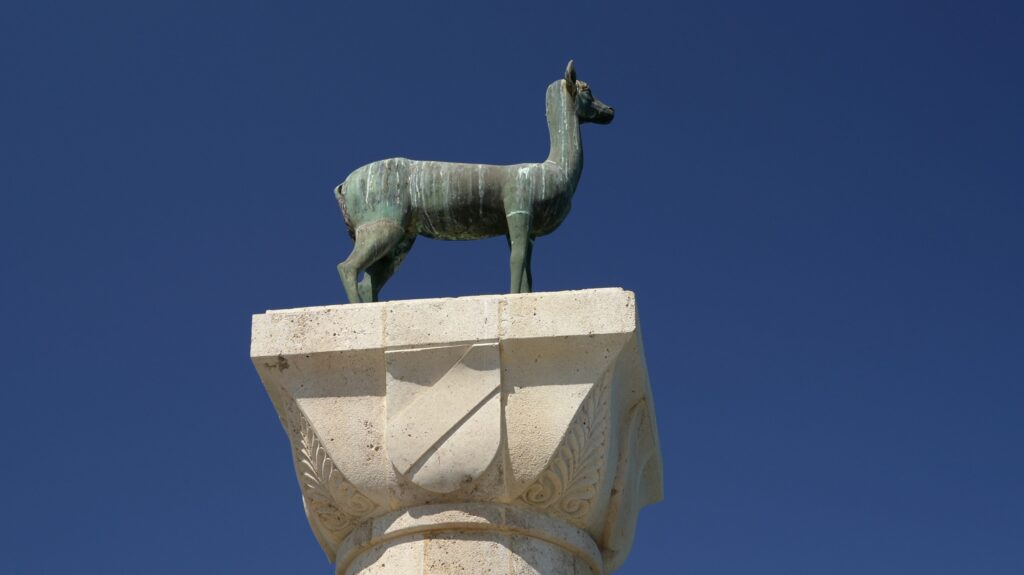
The harbor here, besides being a strategic Naval base for the Knights, is where the Colossus of Rhodes once stood, one of the seven wonders of the ancient world. Built of bronze in 280 BC, the statue stood 33 meters high or 108 feet. He only stood for 54 years, then a massive earthquake broke the statue off at the knees. The people took this as a bad omen and never tried to rebuild the Colossus. Over the next century, traders would come and haul pieces of the bronze away until it was all gone. The harbor is still lined with ancient windmills that not only ground grain for export, but were also used as Naval lookout towers.
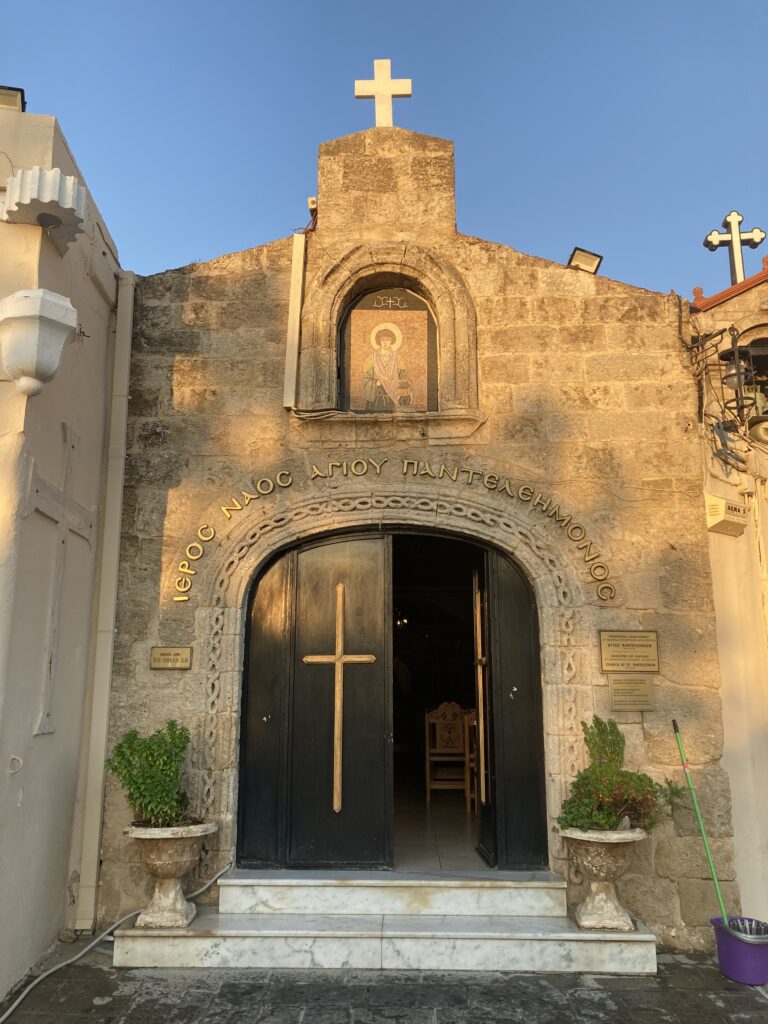
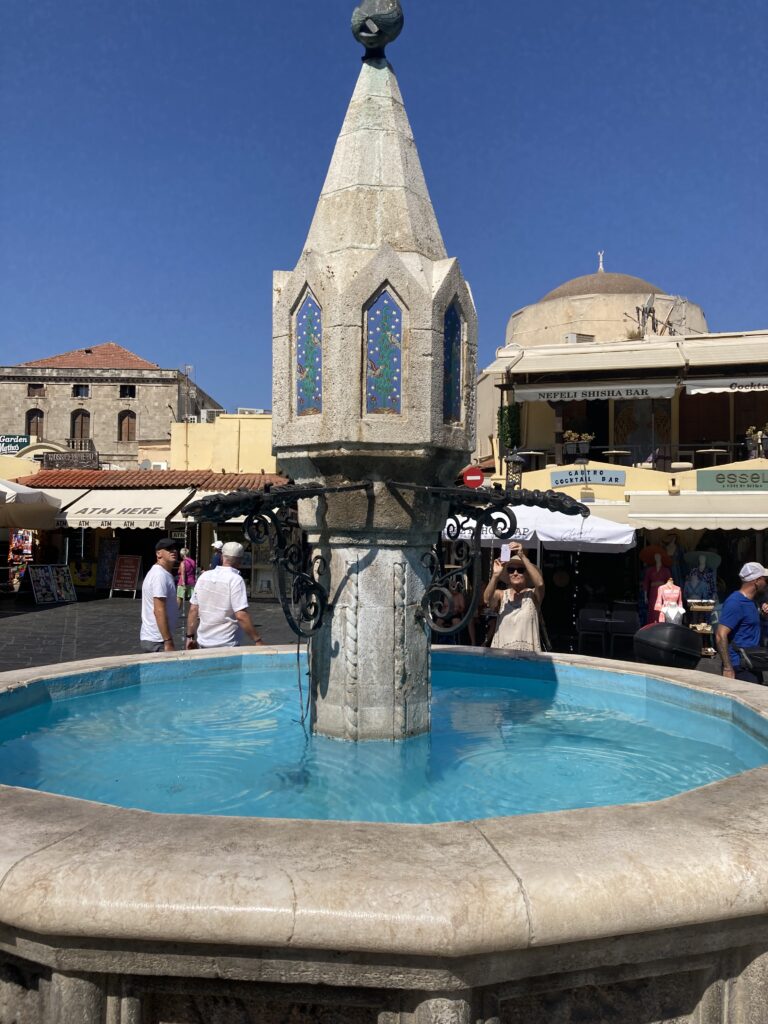
Cruise ships do come into this harbor and it can get quite crowded and busy. But all the day visitors see the sites, shop for souvenirs on the main street, eat, and then they are gone by late afternoon. We found that when a ship was in, we could just stay a block or two back from the main street and enjoy picturesque alleyways and small local restaurants with no crowds. There is so much history inside these ancient city walls, way more than I can even begin to cover here. It really takes your breath away.
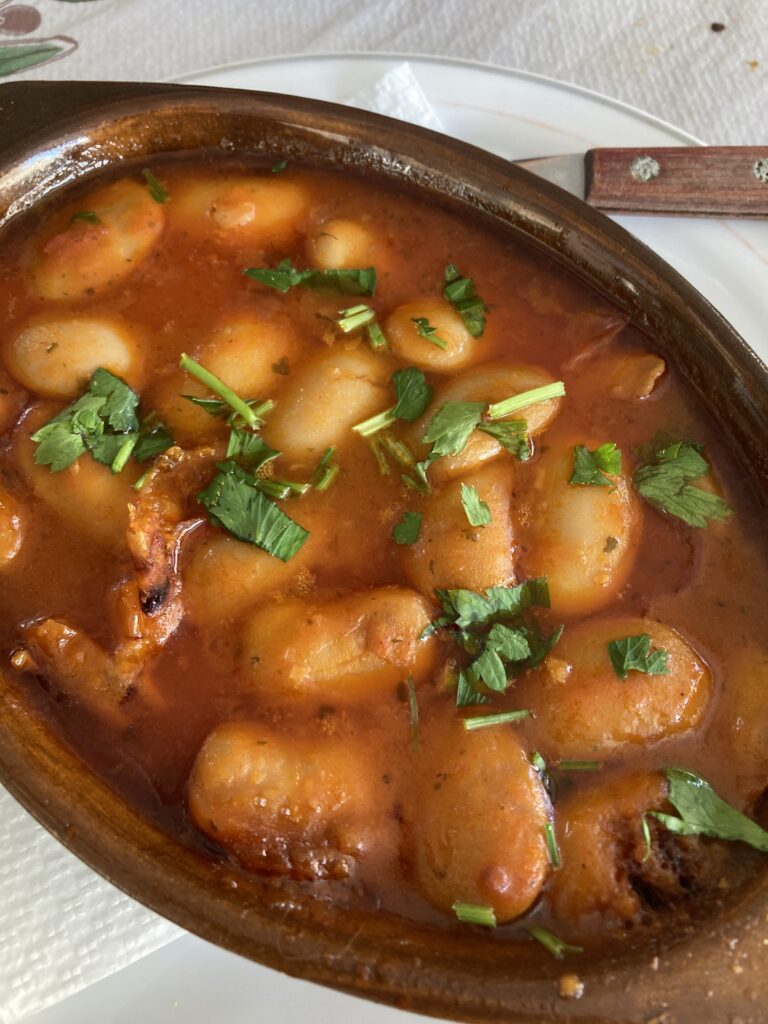
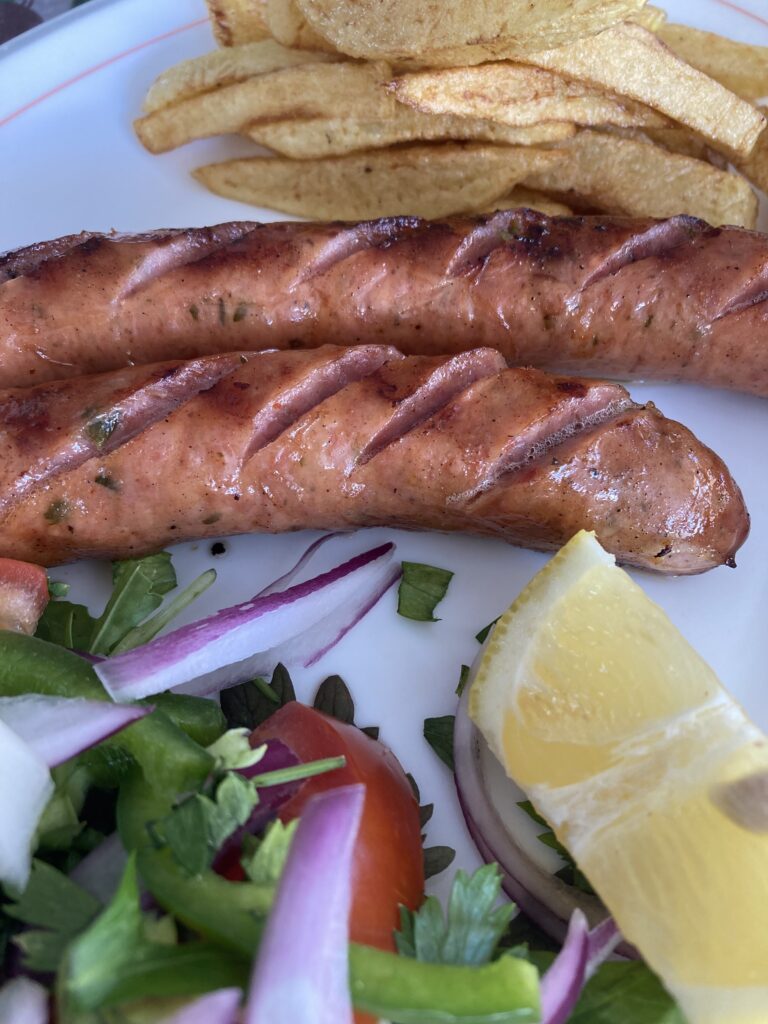
After staying in Rhodes Old City for several days, I headed South, up the stunning rugged coastline to visit Lindos. Known for its beautiful beaches, the ancient acropolis, and picturesque cobblestone streets with whitewashed buildings.
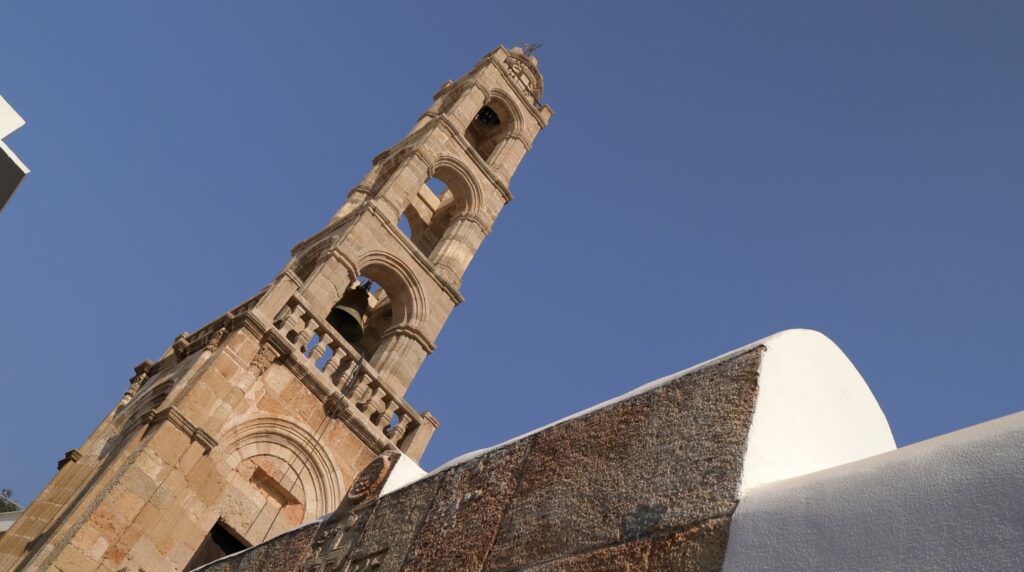

The streets of Lindos are continuous buildings, chiefly with interior courtyards. Most of the houses have not been affected by time or changes in shape or use. They continue to be built from local quarried porous stones, or field stones, then plastered over and white washed. Its charming alleyways, expansive views, Mediterranean cuisine, and cosmopolitan atmosphere draw in everyone visiting the island of Rhodes.
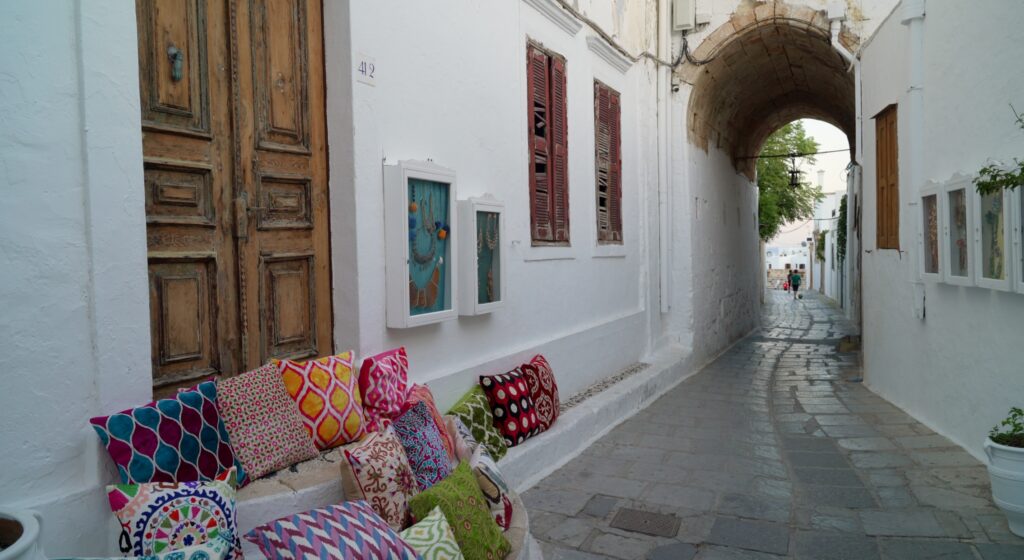
Lindos is a maze of narrow cobbled passages. As picturesque as it is, it can get very over crowded as bus loads of day trippers from the cruise ships flood the small town and small beach for the day. They are all gone by 3:00 in the afternoon to head back to the cruise ship. We stayed four nights in Lindos in a lovely little hotel that had a terrace with tremendous views. The Aegean Sea in front of us and the Acropolis on the hilltop behind.
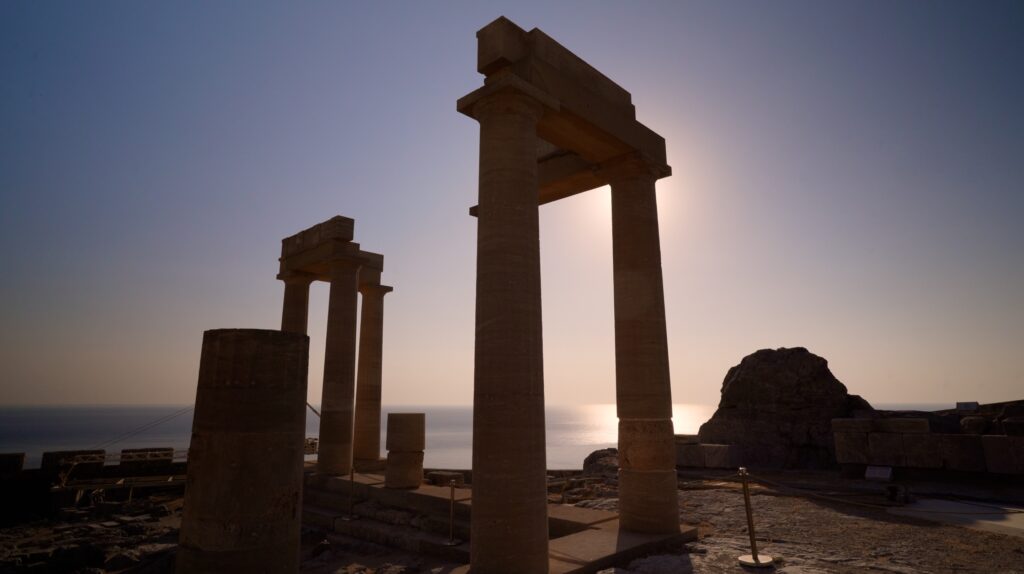
The Lindos Acropolis, or fortified Ancient Greek city, stands at 116 meters above sea level. Blending in with the dramatic natural landscape, the Acropolis provides a breathtaking backdrop to the town below. This was the center of religious and socio-political life in ancient times.
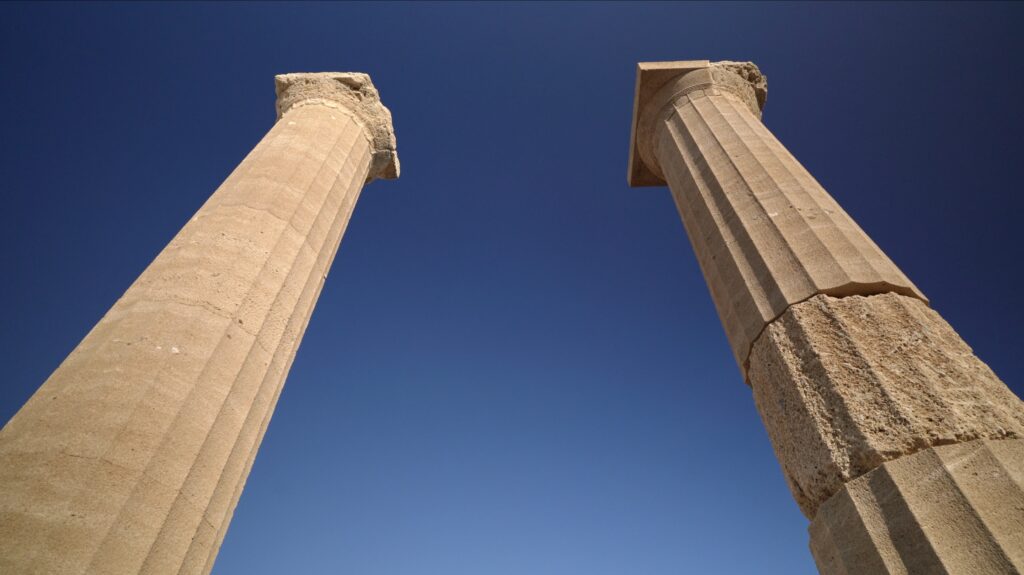
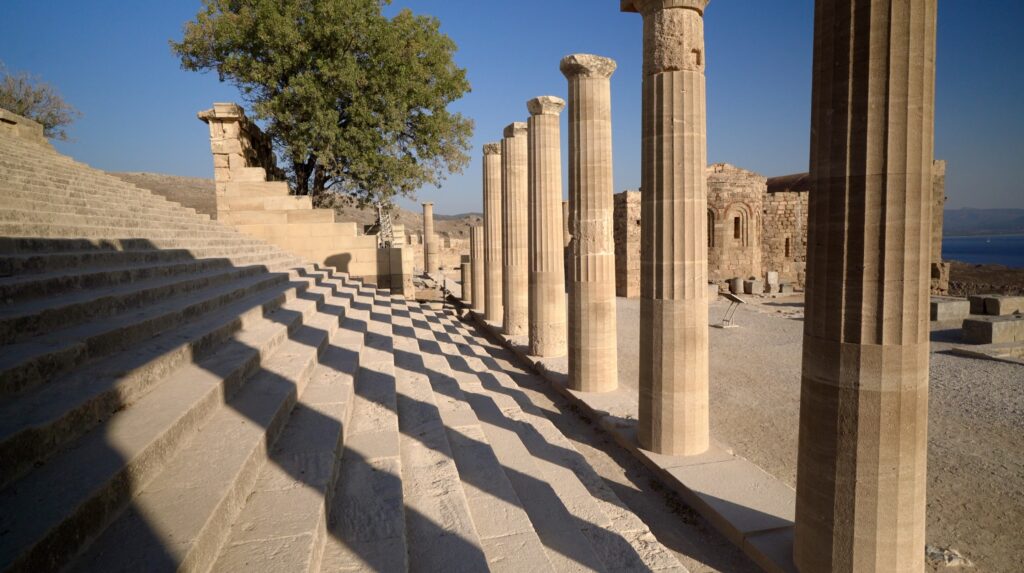
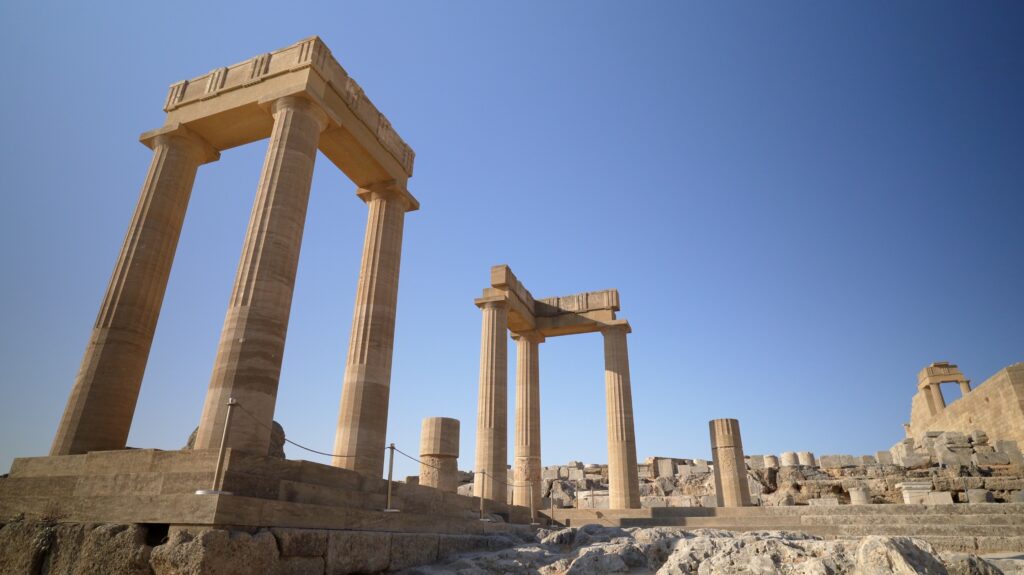
Most of the important archeological monuments can be found at the Acropolis, these include the Hellenistic temple of the goddess Athena Lindia, which was built on the ruins of an already ancient temple. You can also find the Propyaea, an Ancient Greek portico, these both date back to the 3rd century BC.
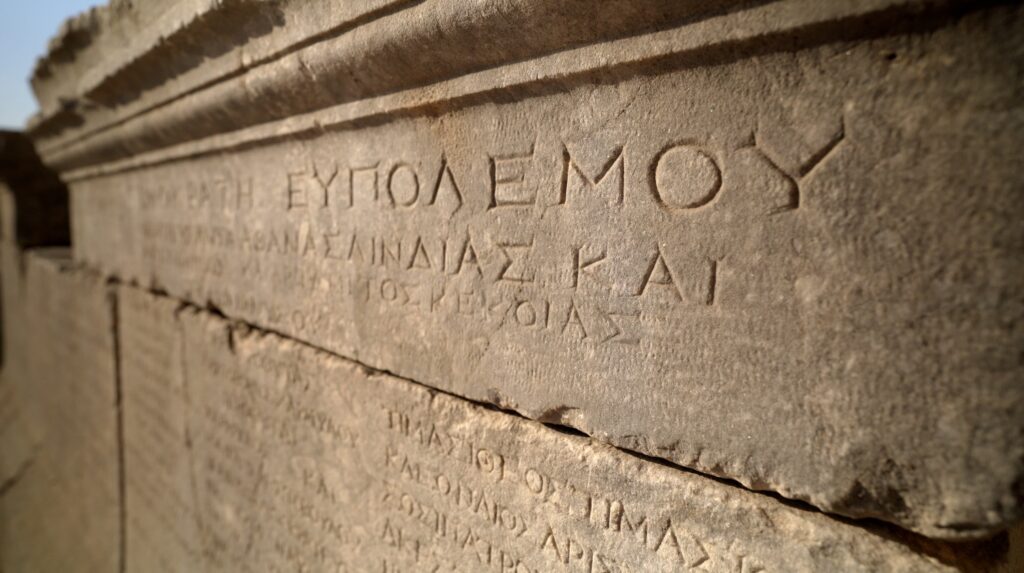
Although Athena remained the principal goddess of the temple, the cult of Zeus was introduced here by the Romans in 352 BC. There is also the Stoa, another massive sheltered promenade built in 200 BC. A little out of place was the Byzantine chapel of St. John. As in Rhodes Old City, the Knights of St. John were here centuries later, from 1309 until 1522, when they were forced to hand the island of Rhodes over to the forces of the Sultan Suleiman the Magnificent. Other smaller ruins can be found scattered in and around Lindos.
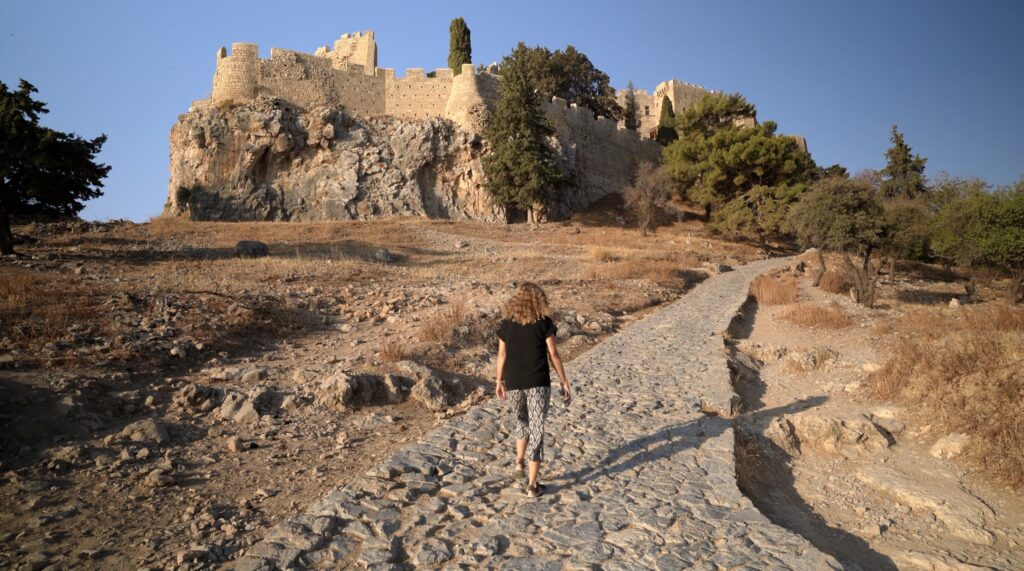
There is not much flat walking in Lindos and we did have to climb a few flights of stairs to get up to our hotel. The only way to get to the Acropolis is to walk up the hill, or ride a donkey. I walked up a couple of times and it was so worth it. When we entered the Acropolis we went early and were some of the first in line.
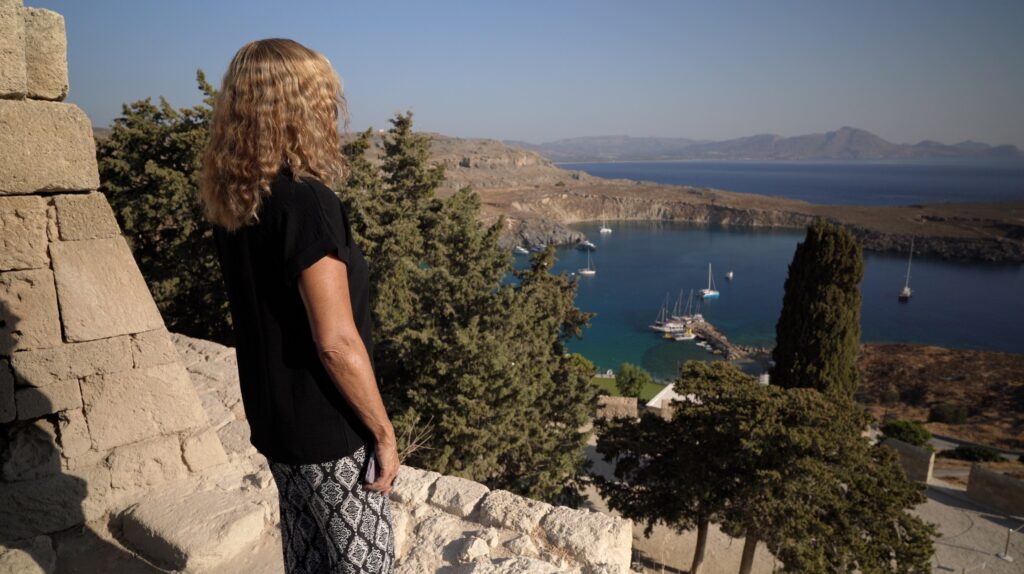
This was to avoid the heat and the crowds. People were really lining up to get in by the time we were leaving so arriving early really paid off. I think the island of Rhodes would be much more laid back during the shoulder season, but I am so glad we had the opportunity to visit when we did.

Our next stop should be a more laid back and relaxing experience, the stunning Greek Island of Karpathos.
Our Rhodes Island Video
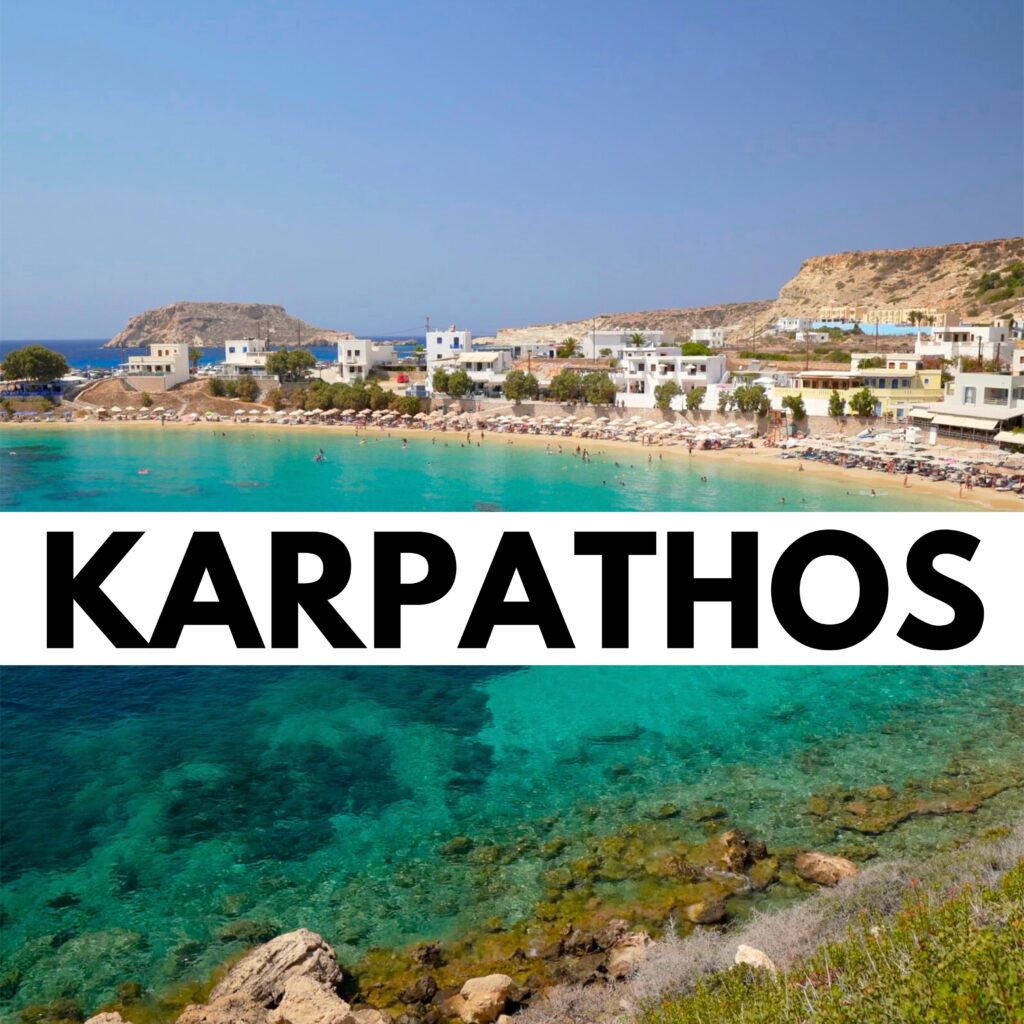
Check out our blog and video from stunning Karpathos Island, Greece!